
Wagner Shredders: performance engineering
Wagner Shredders: performance engineering

Wagner advanced shredding systems for AU/NZ—metals, EOLT, carpets, WEEE, C&I waste
INTRO
Hard Recycle supplies and integrates Wagner Shredder equipment across Australia and New Zealand for non-plastic streams: light ferrous and aluminium, copper/aluminium cables, WEEE, end-of-life tyres (EOLT), carpets/textiles/automotive interiors, oil filters and light steel components, and heterogeneous C&I/MSW pre-processing for RDF/SRF. Below is a precise, engineering-oriented view of the machines, parameters, and line architectures we typically deliver—plus how we de-risk installation and operations to Australian/New Zealand standards.
References in this area cover applications ranging from aluminium profiles and briquettes to copper cable, small appliances and car electronics (WEEE), municipal/C&I presort, carpets and car carpets, pallets/wood with contamination, oil filters/light ferrous cans, and mixed waste for RDF/SRF.
Wagner’s Core platforms
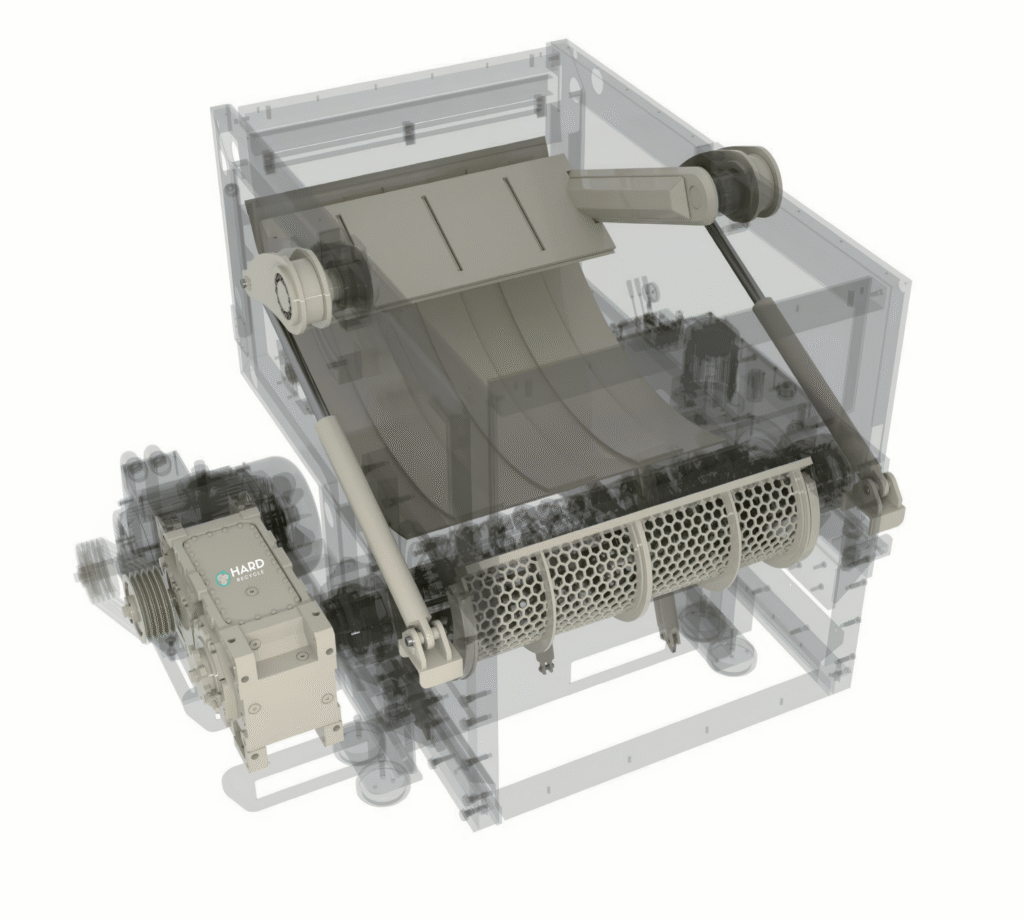
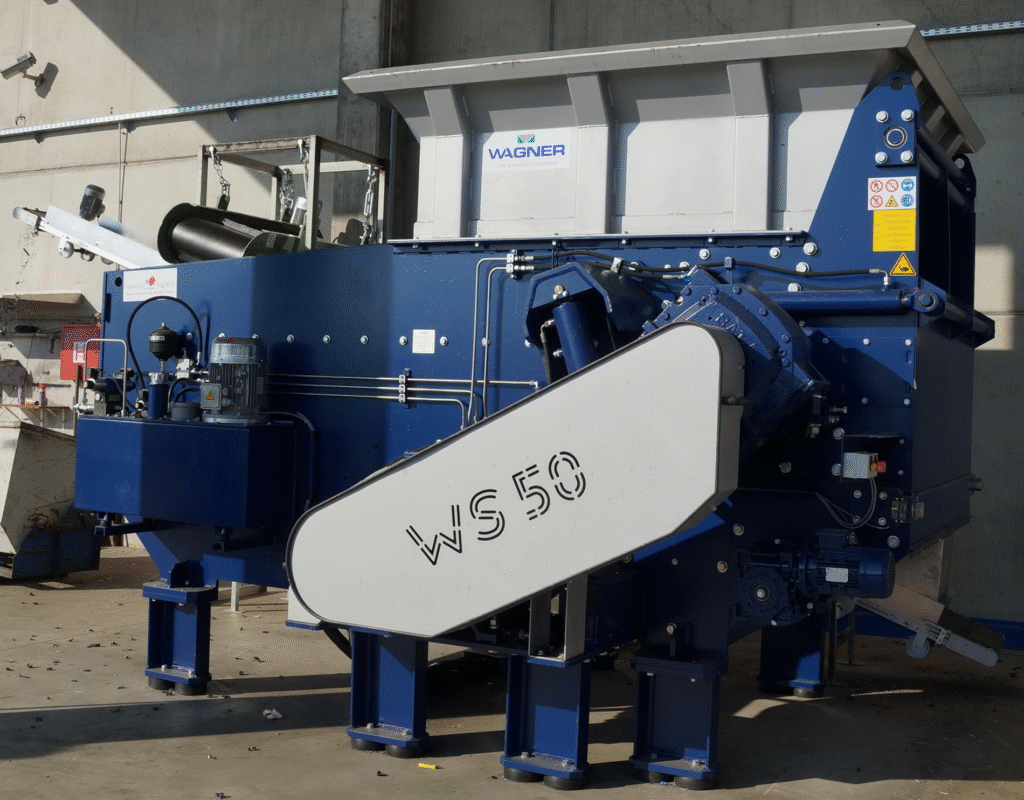
ProCut single-shaft primary shredders (PC 1300 / 1600 / 1900)
Heavy single-shaft platform with swing pusher, external rotor bearings, and HARDOX® screen baskets for defined chip size.
-
Rotor lengths: 1,250 / 1,550 / 1,850 mm
-
Rotor speed: ~70–120 rpm (slow, torque-rich; keeps ductile metals from smearing)
-
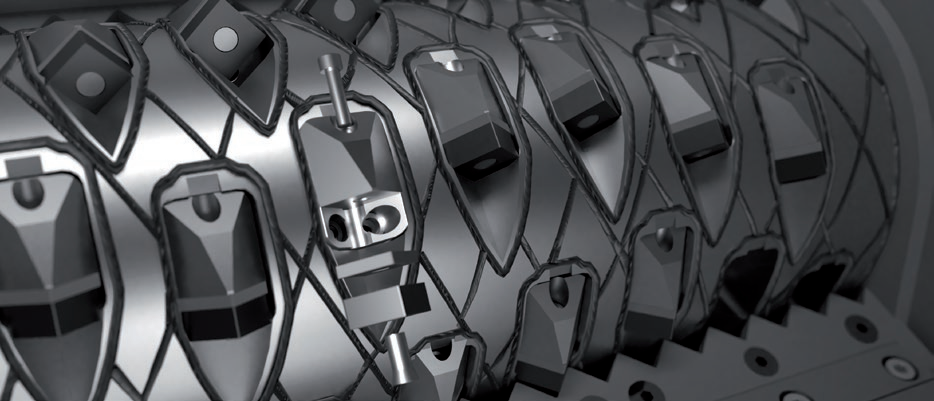
Knife sets: 69 / 84 / 99 knives, 43×43 mm tool-steel or carbide; 8-way indexable; removable quick-change holders
-
Screened output: 10–80 mm via hydraulically actuated screen baskets (HARDOX®)
-
Nominal drive power: 55–75 kW (PC 1300), 75–90 kW (PC 1600), 110–132 kW (PC 1900)
-
Serviceability: maintenance flap with direct tool access; proportional-valve pusher with program profiles; overload clutch; remote diagnostics option
When we specify it: wherever a tight particle-size envelope is required for separation or downstream milling—e.g., 10–20 mm for cable granulation/trays, 20–40 mm for WEEE fractionation, 30–50 mm for RDF/SRF or for flowable chips from thin-gauge ferrous and aluminium.
Twin-shaft pre-shredders (slow-speed, high-torque)
Front-end units for bulky, heterogeneous, or contaminated feed where a coarse, low-dust, high-uptime cut is needed.
-
Cutting action: counter-rotating shafts; automatic reverse on overload; constant-torque, low-speed cut
-
Maintenance concept: cutter stacks/shafts designed for quick replacement; bearings protected from fines; heavy, wear-protected housings
-
Typical discharge: ~80–300 mm (cutter profile/comb selection dependent)
When we specify it: rims-on tyre intake (pre- or post-dismantling), oil filters/light ferrous items, carpet bales, whitegoods and small WEEE, mixed C&I/MSW front-end volume reduction.
WRD tyre dismantlers (WRD 450 / WRD 850 PLUS)
Hydraulic rim/tyre separation upstream of shredding.
-
WRD 450: ~7.5 kW; up to 60 tyres/h; two-hand protective operation; ~2.3×2.0×1.6 m; ≈1.3 t
-
WRD 850 PLUS: 22 kW; up to 120 tyres/h; automatic cycle in safety enclosure; ~3.0×2.35×1.9 m; ≈2.65 t
-
Mechanics: large oil volume for thermal stability; three-cylinder star arrangement with adjustable synchronous lift; sliding guides; wear-protected frames
When we specify it: EOLT intake cells needing safe, rapid rim removal to protect downstream shredders and increase throughput.
Size reduction: what actually matters (and how we design for it)
-
Target chip size vs separation physics
-
10–20 mm: cable plants feeding granulators and air/density tables need clean, homogeneous chips to maximise metal recovery and limit copper smear.
-
20–40 mm: WEEE sub-fractioning for sensor-based sorting and hand-pick quality control.
-
30–50 mm / <80 mm: RDF/SRF specs, tyre-derived fuel, or light metals where dimensional stability and bunker flow are critical.
-
-
Throughput vs screen aperture
Smaller screens tighten PSD but lower t/h. We match screen to downstream contracts, then scale drive power/rotor length or add a pre-shred to protect primary throughput. -
Knife geometry & metallurgy
Ductile aluminium and cables benefit from sharper tool-steel geometries to reduce smearing; mixed light ferrous prefers tougher edge profiles. 8-way indexable knives cut knife-cost/tonne and minimise downtime. -
Material handling and hang-ups
Chute angles set to angle-of-repose; anti-bridging hoppers for carpets/textiles; lined impact zones; sealed pans under pre-shreds for oil-bearing feeds (filters, cans). -
Energy and drive selection
Slow-speed, high-torque drives with intelligent reverse routines avoid stalls and limit peaks. We use VSD/soft-start to grid requirements and can schedule pusher profiles for variable-density feeds. -
Safety, dust, and fire
Interlocks, fenced infeeds, LOTO points, and safety-rated e-stops to AS/NZS. For WEEE and textiles, we add IR/temperature sensing, spark detection tie-ins, and baghouse/wet-scrubber connection spigots sized for appropriate duct velocities and ΔP.
Application-driven layouts (examples only. your application might be different)
A) Metals & light ferrous/aluminium
Infeed: thin-gauge aluminium profiles and offcuts, extrusion skeletons, sheet trim, radiators, light ferrous items, paint cans.
Layout: twin-shaft pre-shred (120–250 mm) → over-belt magnet → ProCut (20–40 mm) → eddy-current and/or sensor sort → bunker/baler.
Notes: for very ductile aluminium, bias to 20–30 mm screens and sharper knife profiles; for mixed light ferrous, open to 30–50 mm to protect rate while holding spec.
B) Cable (Cu/Al) & wire harness pre-processing
Objective: stable 10–20 mm feed to granulators/air tables with minimal smear.
Layout: twin-shaft (150–200 mm) → PC 1300/1600 at 10–20 mm → granulator → air/density table → metal concentrate bunker.
Design details: bird-nest prevention in chutes; maintenance-flap access for fast knife indexing; external rotor bearings out of the fines zone.
C) WEEE (small appliances, car electronics, mixed e-scrap)
Layout: de-battery & hazard removal → twin-shaft (~80–150 mm) → magnet → eddy-current → ProCut (20–40 mm) for sub-fractioning → sensor sort/hand-pick.
Controls: remote diagnostics and energy-draw monitoring; spark/temperature detection tie-ins; sealed under-machine pans; optional nitrogen-ready duct ports if the site uses inerting.
D) EOLT (tyres) with rims
Layout A — rim separation cell: WRD 850 PLUS (auto, enclosed) → rims to metals stream; tyres to storage or shredder.
Layout B — full pre-process: WRD 850 PLUS → twin-shaft (100–150 mm) → over-belt magnet → ProCut (30–50 mm) for TDF/SRF spec → bunker.
Why: faster safe rim removal, higher primary uptime, cleaner metal stream; dimensionally stable tyre chips suitable for magnets and blending.
E) Carpets, geotextiles, automotive interiors
Challenge: fibrous/elastomeric materials tend to wad.
Layout: twin-shaft (~80–150 mm) → ProCut (25–40 mm) → optional wind-shifter → bunker.
Mechanical: anti-bridging hoppers, wear-lined walls; pusher programs tuned for dense felts; dust take-off points over both machines.
F) Oil filters, light steel components, cans
Layout: twin-shaft with sealed drip tray → magnet → ProCut (30–50 mm) → re-clean magnet → bunker.
Environmental: secondary containment under pre-shred; drain points into site waste-oil management; HARDOX® liners and screens for abrasion.
G) C&I/MSW pre-processing (non-plastic emphasis) for RDF/SRF
Layout: twin-shaft front-end (150–250 mm) → magnet → screen (two-deck if needed) → ProCut finishing pass to <80 mm fuel spec → QC pick → bunker.
Result: front-end handles heterogeneity; finishing pass locks in the contracted particle size. Add wind-sifting/density separation post-ProCut where glass/fines content is high.
Example configurations (illustrative parameter sets only)
-
Cable prep (Cu/Al): Twin-shaft → PC 1300 at 10–20 mm, 69×(43×43 mm) knives, 55–75 kW drive, rotor ~70–120 rpm. Delivers clean, homogeneous chips to the granulator and tables.
-
WEEE finishing: Twin-shaft to ~100 mm → PC 1600 at 20–40 mm, 84 knives, 75–90 kW; external bearings and overload clutch tolerate occasional heat sinks/fasteners.
-
EOLT intake: WRD 850 PLUS (~3.0×2.35×1.9 m, 22 kW, ~120 tyres/h). Follow with twin-shaft and PC 1600 at 30–50 mm for TDF/SRF where required.
-
Light metals (Al profiles, thin ferrous): Twin-shaft → PC 1900 at 30–50 mm, 99 knives, 110–132 kW; magnets/eddy-current downstream as needed.
Actual throughput depends on material mix, bulk density, contamination, and chosen screen size. We finalise motors, screens, conveyors, guarding, and interlocks after reviewing your feed samples and contractual targets.
Implementation detail Hard Recycle covers (ANZ-specific)
Mechanical
-
Chute/hopper design to angle-of-repose; anti-bridging measures for fibrous and stringy feeds; replaceable wear liners in high-impact zones
-
Service platforms and maintenance-flap clearances for safe, fast knife changes
-
Magnet frames with correct stiffness; guarded nip points; belt scrapers matched to fines load
Electrical & controls
-
AS/NZS-compliant wiring, LOTO points, interlocks, and safety-rated e-stops
-
VSD/soft-start aligned to site power; demand management for multi-drive lines
-
Pusher/reverse profiles set in PLC work programs; energy-draw monitoring; remote diagnostics
Air, dust, noise
-
Baghouse/wet-scrubber interfaces with duct velocities and ΔP sized to the duty; sealed pans for oil-bearing materials; acoustic options where limits apply
Safety & compliance
-
Fenced infeeds; two-hand controls (WRD 450); safety-enclosed autos (WRD 850 PLUS)
-
Fire detection tie-ins (IR/temperature) and suppression interface points for WEEE/textiles
-
SOPs for battery and pressure-can removal in WEEE streams
Serviceability & spares
-
8-way knives and quick-change screens (10–80 mm) held locally; tool-holder spares kits
-
Swap-out cutter stacks/shafts for twin-shaft units; bearings, seals, hydraulic components in site-specific spares lists
What we need to quote accurately
-
Material list with photos/video, moisture/oil content, contamination notes
-
Tonnage per hour and shift pattern
-
Target particle sizes and downstream steps (magnets, eddy, optics, granulation, fuel spec)
-
Site power constraints, noise/dust limits, floor space and access
-
Safety/compliance expectations (guarding philosophy, access control, detection/suppression)
Bottom line:
For non-plastic streams—metals, cables, WEEE, EOLT, carpets/textiles, oil-bearing light steel, and mixed C&I/MSW—Wagner’s twin-shaft + ProCut + WRD toolkit gives predictable particle size, high uptime, and low knife cost/tonne. Hard Recycle designs, integrates, installs, and supports these cells locally across Australia and New Zealand.