Pulper rejects waste management
Pulper rejects waste management

The $10 Million Leak: Engineering a Zero-Waste Solution for Pulper Rejects
The Hidden Cost of the “Circular Economy”
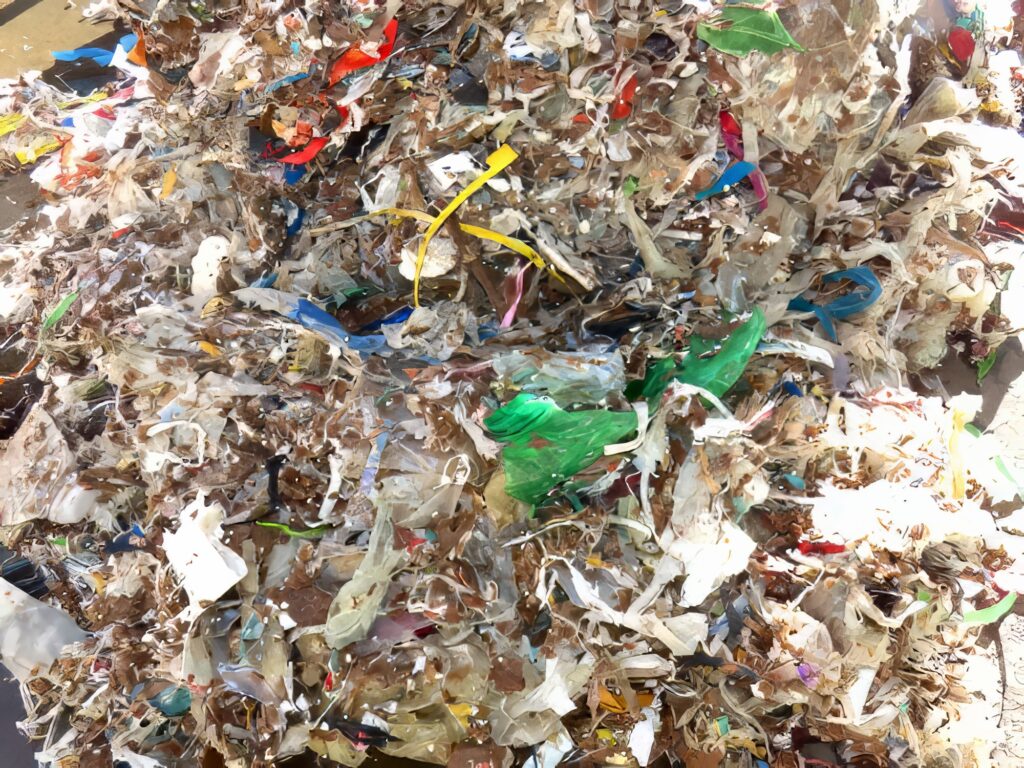
Recycling is a messy business. While the public image of paper recycling involves clean cardboard boxes being magically transformed into new packaging, the reality on the factory floor is gritty, wet, and expensive.
For a typical Australian paper mill processing 350,000+ tonnes per annum (tpa) of Old Corrugated Containers (OCC), the “reject management” line is often the most overlooked part of the plant. Yet, it is the site of a massive financial haemorrhage.
In the industry, we call it “The Leak.” It’s not a leak of water, but of Operating Expenditure (OpEx).
At Hard Recycle, we are currently engineering a solution for a major Australian client facing a standard but devastating profile:
-
35,000 tpa of Coarse Rejects.
-
25,000 tpa of Fine Rejects.
-
A $10 million annual landfill bill.
In New South Wales and Victoria, where the combined EPA levy and gate fees are pushing disposal costs north of $286 per tonne, “business as usual” is no longer an option. Landfilling these streams is equivalent to shredding $10 million in cash every year.
But to solve the problem, you first have to understand the beast you are fighting.
The Anatomy of the Enemy: Where do Rejects Come From?
To understand why this waste is so difficult to handle, we have to look inside the Hydrapulper.
Imagine a giant, industrial-sized blender, five metres wide. Into this vat, the mill drops thousands of tonnes of baled OCC—cardboard collected from the back of supermarkets (Woolworths, Coles, Bunnings) and kerbside recycling bins. These bales are not pure paper. They are wrapped in high-tensile steel baling wire and contain a chaotic mix of contaminants:
-
Plastic Shipping Envelopes stuck to the boxes.
-
Plastic Strapping used to secure pallets.
-
Styrofoam inserts from appliance packaging.
-
Adhesive Tapes (PVC and PP) sealing the cartons.
-
Staples and Paperclips.
1. The Creation of the “Rag Rope” (The Coarse Stream)
As the Hydrapulper swirls the cardboard and water to dissolve the fibre, the contaminants do not dissolve. The plastic strips and steel baling wires float in the vortex.
To remove them, the mill dangles a “ragger rope”—initially just a piece of wire—into the centre of the whirlpool. As the water spins, the baling wires and long plastic strips snag onto this rope. They twist and braid together, tighter and tighter, forming a continuous, dense snake of trash known as the “Rag Rope”.
This rope is continuously pulled out of the pulper and cut into chunks.
-
The Problem: It is physically formidable. It is reinforced with steel wire (making it uncuttable for standard shredders), knotted with high-strength plastic, and—crucially—it acts like a sponge.
-
The Water Weight: The rope traps usable fibre and massive amounts of water. Often, a “Rag Rope” is 50% to 60% water. When you pay to send this to landfill, you are mostly paying to bury water.
-
The Classification: This forms the bulk of the 35,000 tpa Coarse Stream. It is abrasive, wet, heavy, and notoriously difficult to process.
2. The Sludge from the Bottom (The Fine Stream)
While the rope catches the big stuff, the smaller contaminants—shredded plastic bits, sand, glass, and wet-strength glue—pass through the pulper’s extraction plate. They are eventually ejected by the mill’s detrasher and cleaning screens.
-
The Problem: This 25,000 tpa Fine Stream is a grey, sloppy sludge. It is rich in calcium carbonate (CaCO3 filler from the paper) and cellulose fines.
-
The Destination: While often diverted to agriculture as a soil conditioner (due to the lime content), the presence of micro-plastics makes it an increasing environmental liability.
Our focus today is the Coarse Stream. The Rag Rope is the “widow-maker” for recycling equipment. It stalls shredders, wraps around shafts, and destroys blades. Dealing with it requires more than just brute force; it requires intelligent engineering.
The Hard Recycle Solution: Technical Flow-Sheet
At Hard Recycle, we view the Rag Rope not as trash, but as a resource trapped in a difficult package. Our proposed engineering solution follows a strict logic:
Liberate → Protect → Recover → Condition → Separate → Dry → Densify.
We have selected specific equipment partners based on their ability to handle the extreme torque and abrasion requirements of Australian OCC rejects.
Stage 1: Primary Size Reduction (Silmisa Maquinaria)
The first line of defence is a Silmisa “Lince” Series dual-shaft shredder.
-
Function: Primary torque-shredding to break the rag ropes and liberate the steel wire from the plastic.
-
Spec: Low RPM, high torque (2 x 132 kW drives).
-
Output: <150-200 mm.
-
Why Silmisa? Standard shredders stall on rag ropes. The Silmisa Lince is designed with an aggressive hook profile that shears high-tensile wire without wrapping or jamming.
Stage 2: Primary Ferrous Removal (ITR Recycling Systems)
Crucial Step: Immediately after shredding, the material passes under an ITR SMA Overbelt Magnet.
-
Function: Equipment protection. It lifts the liberated steel bale wire and heavy tramp metal before it can damage the downstream washer.
-
Result: A “safe” plastic/fibre stream ready for washing.
Stage 3: Fibre Recovery & Washing (Tecnofer)
We integrate a Tecnofer Horizontal Washing Machine.
-
Function: Using friction and process water to detach valuable cellulose fibre from the plastic film.
-
Recovery: This stage recaptures approximately 15% of the mass as recoverable pulp, which is pumped back to the mill’s stock prep area.
-
Financial Impact: At $100/t for OCC, recovering 5,000+ tpa of fibre offsets the project OpEx by $500,000+ per year.
Stage 4: Mechanical Dewatering (Tecnofer)
Directly following the washer, the coarse material enters a Tecnofer CP Series Screw Press.
-
Function: High-pressure mechanical dewatering.
-
Spec: Hydraulic back-pressure cone, reducing moisture from ~80% to <50% Dry Solids (DS).
-
Criticality: Mechanical dewatering is 10x cheaper per tonne of water removed than thermal drying.
Stage 5: Conditioning Trommel Screen (ITR Recycling Systems)
The “Fluffer”: The screw press discharges a compressed “cake.” To separate effectively, we must break this up.
-
Function: Material conditioning. The rotating trommel “fluffs” the compacted cake back into loose material.
-
The Grit Trap: Crucially, this stage screens out glass, stones, and small grit (<20mm) that were trapped in the wet mass.
-
Benefit: It protects the downstream shredder blades and ensures the final fuel is low in ash.
Stage 6: Aeraulic Separation (ITR Recycling Systems)
We remove the “machine killers” using an ITR SZZ Zig-Zag Air Classifier.
-
Function: Density separation. A high-velocity air curtain lifts the light plastics (PE/PP films) while dropping heavy contaminants (PVC, heavy stones, metal chunks) into a reject bin.
-
Spec: 12,000 m3/h airflow.
-
Reality Check: We anticipate ~20% of the stream will be rejected here as “heavies” and sent to landfill.
Stage 7: Fine Shredding (ITR/Silmisa)
To achieve the $<30$ mm particle size required for cement kiln injection, we utilise an ITR HMS Series Hammer Mill.
-
Function: Aggressive size reduction and granulation.
-
Spec: 250 kW – 315 kW drive, Hardox-lined chamber.
-
Output: Uniform <30 mm flake.
Stage 8: Secondary Ferrous Polish (ITR Recycling Systems)
Fine shredding often liberates small staples, screws, and wire fragments that were hidden inside the plastic.
-
Function: Protection. An ITR Drum Magnet removes these small ferrous bits.
-
Why? Ferrous metal is the enemy of the Eddy Current Separator (it heats up and burns the belt). This step protects the next machine.
Stage 9: Non-Ferrous Recovery (ITR Recycling Systems)
We deploy an ITR SCP Eddy Current Separator.
-
Function: Revenue generation. It ejects non-ferrous metals (aluminium cans/foil) from the stream.
-
Yield: Recovering the high-value aluminium fraction for sale.
Stage 10: Thermal Drying (Tecnofer)
To reach the premium “Tier 1” RDF standard (Net Calorific Value >18 MJ/kg), we install a Tecnofer ESL Fluidised Bed Dryer.
-
Function: Uses waste heat or gas to lower moisture from 50% to <15%.
-
Why Fluidised Bed? Unlike rotary dryers, the fluidised bed offers excellent heat transfer coefficients for light plastic flakes, preventing the material from melting or clumping.
Stage 11: Compaction & Baling (Kozkel)
Finally, the dry RDF is fed into a Kozkel Premium Series automatic channel baler.
-
Function: High-density baling for logistics optimisation.
-
Spec: 60-tonne press force, producing 1,000 kg export-grade bales.
Process Flow Logic (The Hard Recycle Engine)
-
The Breaker: Silmisa Shredder tears the ropes.
-
The Guardian: ITR Overbelt Magnet pulls the heavy wire.
-
The Wash: Tecnofer Washer recovers the fibre.
-
The Squeeze: Tecnofer Press wrings out the water.
-
The Fluffer: ITR Trommel breaks the cake & drops grit.
-
The Sort: ITR Air Classifier drops the stones/PVC (20% to landfill).
-
The Grind: ITR Fine Shredder sizes to <30mm.
-
The Polish (Fe): ITR Drum Magnet catches the staples.
-
The Polish (Al): ITR Eddy Current grabs the Aluminium.
-
The Roast: Tecnofer Fluidised Bed dries to <15% moisture.
-
The Brick: Kozkel Baler packs the fuel.
The Financial Reality: The Truth about ROI
Let’s look at the hard numbers for a NSW-based operation in 2026. We believe in being conservative with our modelling—no “best case” fluff.
Baseline (Do Nothing):
-
Landfill Cost: 35,000 tonnes x 286/t = $10,010,000 p.a. Cost
Hard Recycle Solution (Realistic Case):
-
Input: 35,000 tpa.
-
Fibre Recovery: 5,000 tpa (Return to Mill).
-
Water Removal: 8,000 tpa (Evaporated).
-
Metal Recovery: 1,500 tpa (Sold).
-
Residual Landfill: 7,000 tpa (20% Heavies/Grit).
-
RDF Product: 13,500 tpa (Fuel).
| Item | Volume (tpa) | Unit Value ($) | Annual Impact ($) |
| Landfill Saving | 28,000 t diverted | $286 /t | $8,008,000.00 |
| Fibre Offset | 5,000 t recovered | $100 /t | $500,000.00 |
| Metal Sales | 1,500 t recovered | $350 /t (avg) | $525,000.00 |
| Residual Landfill | 7,000 t remaining | -$286 /t | -$2,002,000.00 |
| RDF Logistics | 13,500 t product | -$40 /t (transport) | -$540,000.00 |
| OpEx Estimate | (Power, Maint, Labour) | – | -$1,500,000.00 |
| NET ANNUAL BENEFIT | $4,991,000.00 |
In Summary
We are not talking about “green credentials” or marketing spin. We are talking about a $5 million annual improvement to the bottom line.
By deploying the correct sequence of Silmisa, Tecnofer, ITR, and Kozkel equipment, Hard Recycle turns a liability into a controlled industrial process. The technology is proven, the partners are global leaders, and the ROI is undeniable.
If you are burying your rejects, you are burying your profit.
Contact Hard Recycle today to review your mass balance.