
Engineering Plastics Compounding with AZO
Engineering Plastics Compounding with AZO

AZO Architecture for High-Mix Compounding: Silos, LIW, Micro-Additives | Proven Solutions

INTRO
Hard Recycle represents AZO in Australia and New Zealand.
AZO’s Client: AKRO-PLASTIC — an engineering-plastics compounder supplying high-mix PA/PE-based compounds and specials to automotive, E&E and industrial sectors. The site runs multiple twin-screw lines with frequent changeovers and strict traceability.
What AZO delivered: the materials-handling and dosing backbone for a major capacity increase: outdoor storage silos, clean pneumatic transfer to the extruder deck, loss-in-weight (LIW) main feeding, operator-guided micro-additive premix, and finished-goods logistics that serve both short runs and large campaigns without cross-contamination. The brief prioritised safety, flexibility, fast changeovers and future expansion—the same constraints many AU/NZ plants face.
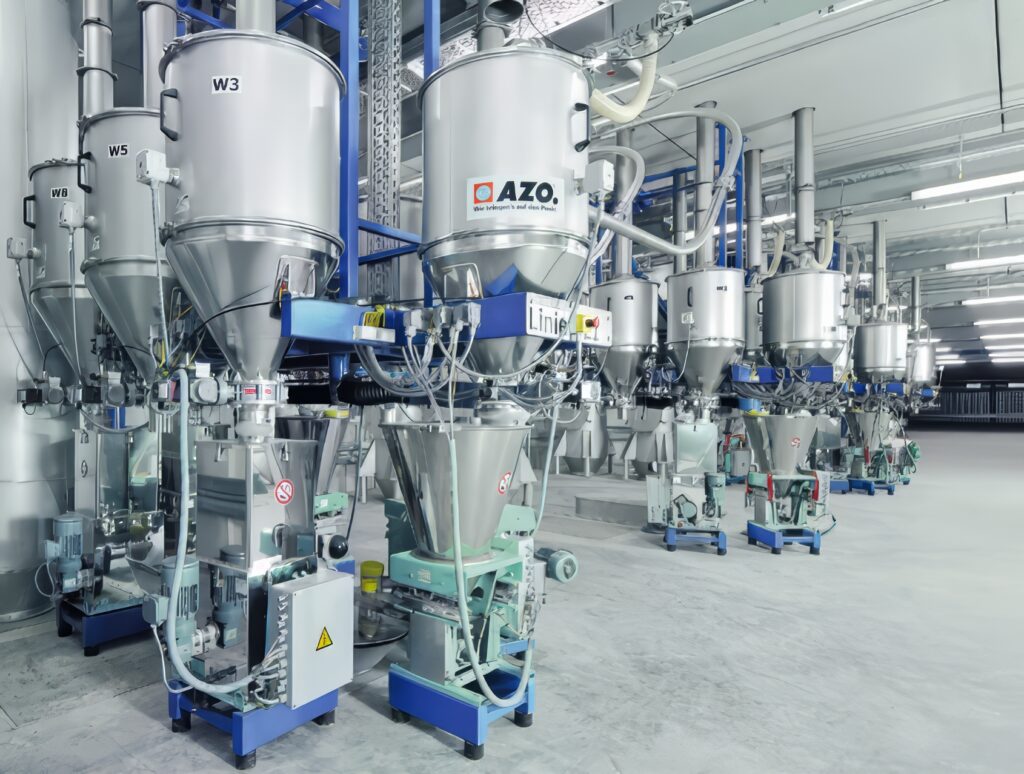
Reference system at a glance
-
Storage that anticipates growth
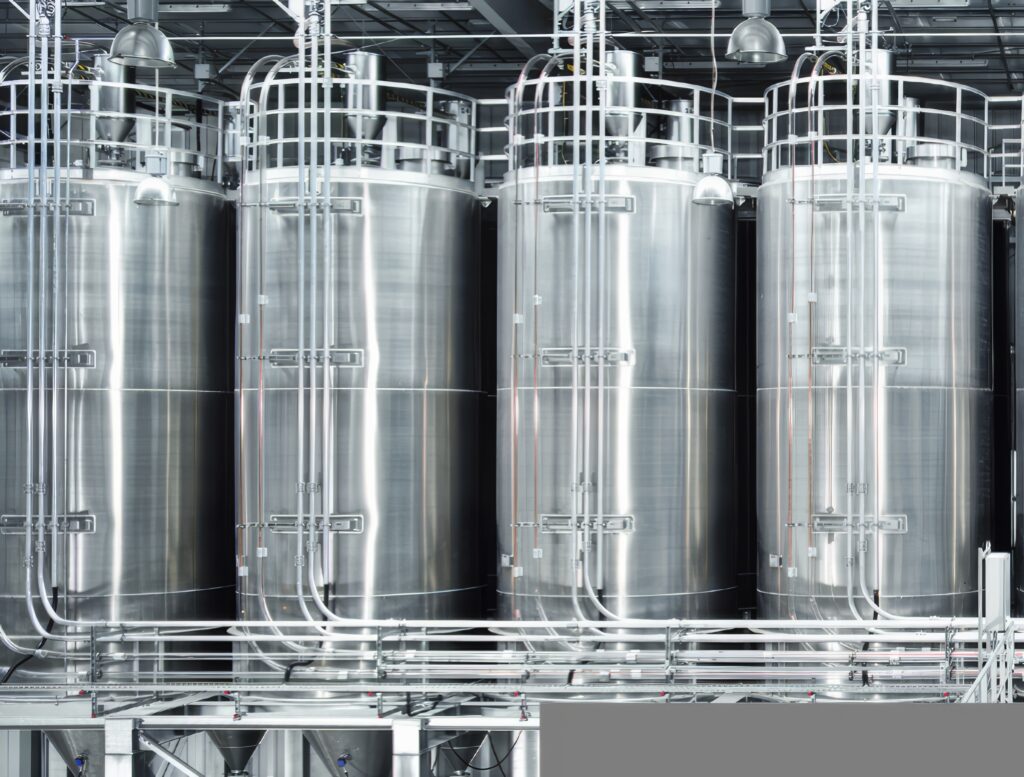
Aluminium outdoor silos (including two-chamber designs) with level probes for inventory and headspace drying for hygroscopic grades. The farm is pre-engineered for more silos later—so expansion is a civil job, not a rebuild. Bulk tankers or bulk containers connect to fixed blowers; a skirt pick-up cone with multiple outlets feeds the conveying network. A manual coupling station selects routes to each compounding line. -
Clean, gentle transfer to extruder receivers
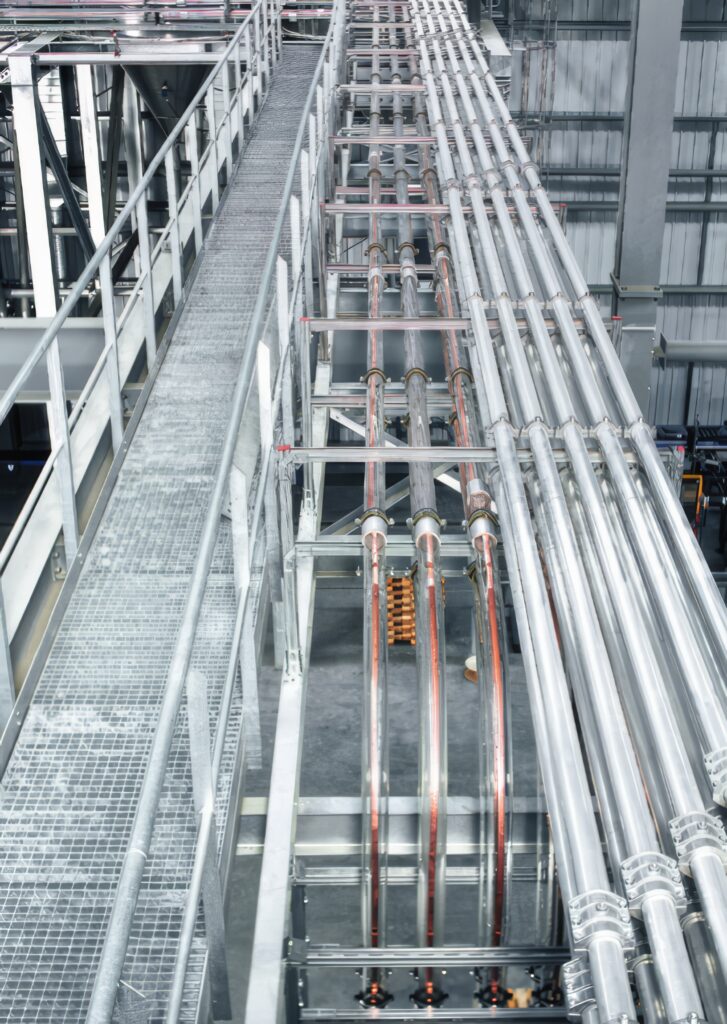
Pneumatic vacuum conveying pulls material to receivers above each extruder; these act as the feed vessels for the LIW hoppers. Receivers can be re-configured for gravity fill via a drop pipe when required. Vacuum pumps are isolated in a segregated blower room behind secondary filtration. For abrasive or static-sensitive duties, glass conveying tubes with earthing are used. -
Main-component dosing that regulates on mass
Each primary stream is metered by LIW feeders slaved to the extruder set-point. Screw speed trims to hold actual mass flow; hopper refills are sequenced so the dosing loop stays stable. -
Additives: grams to bags—with traceability
On the deck above the receivers, bag dumps and docking points for mobile containers feed buffer bins or receivers. High-demand specials (e.g., glass fibre) use larger buffer hoppers that supply two LIW feeders mounted directly above the extruder. For micro-additions and specials, ManDos guides operators via barcodes and tolerances, logs each batch automatically, and premixes in a container mixer before continuous dosing. -
Finished-goods handling aligned to reality
After twin-screw compounding: water quench → pelletiser → flat screen (overs/unders removal) → helical cooler → metal separator → vacuum transfer to day bins for sample-and-bag small lots. Large campaigns go from day bins to a bank of indoor finished-goods silos via a coupling station; a mobile automatic bagger sits under the chosen silo and feeds the pallet line. High-wear transfer runs use glass tubing with earthing.
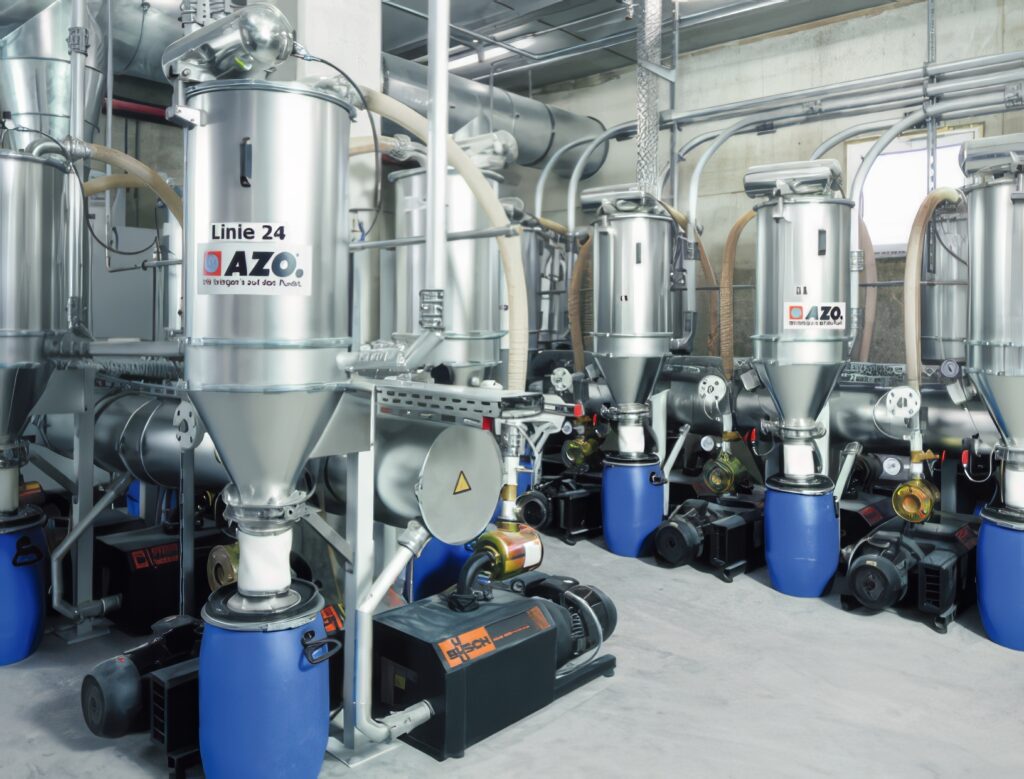
Why this design holds up in production
-
Availability — A separated blower room and secondary filtration keep dust out of vacuum internals; wear/static measures (glass tubes, earthing) extend run time.
-
Repeatability — LIW controls on mass, not assumed bulk density; receiver sequencing isolates refill disturbances; premixed micro-additives reduce batch-to-batch drift.
-
Fast changeovers — Routing at a coupling station, quick receiver re-configuration (vacuum or gravity), documented additive premixes, and a dual finished-goods path (day bins vs silos) keep cleaning and re-routing short.
-
Scalability — Foundations/utilities for more silos and a modular feeding concept de-risk the next line you add.
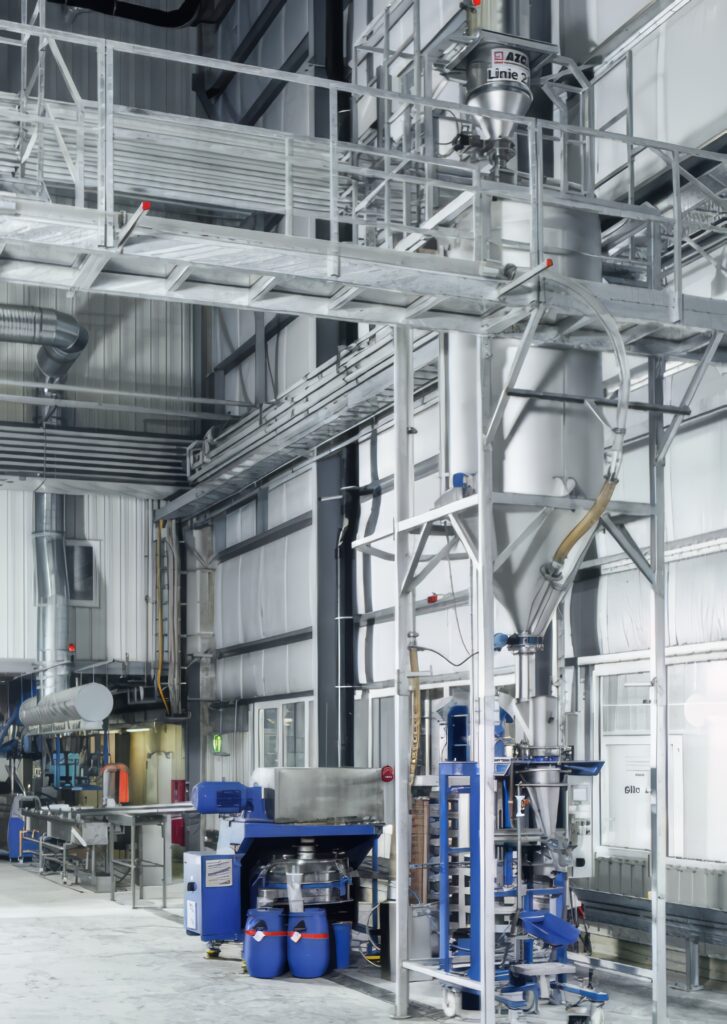
How this maps to AU/NZ producers
The reference runs engineering polymers (polyamides, polyesters and formulated specials) in a high-mix, high-throughput environment. If you supply automotive and transport components, defence/aerospace sub-assemblies, electrical & electronics, appliances, or industrial products, you face the same physics: variable bulk density, abrasive additives, frequent changeovers, and strict traceability. The elements that make this design robust are system choices, not brand-specific IP:
-
Gravimetric (LIW) feeding as the master control for mass flow.
-
Clean pneumatic transfer to decouple conveying from dosing.
-
Operator-guided micro-additives (barcode prompts, tolerance checks, batch logging) to retain genealogy without slowing changeovers.
-
Finished-goods split (day bins for short runs; indoor silos for campaigns) so packaging follows production, not the other way round.
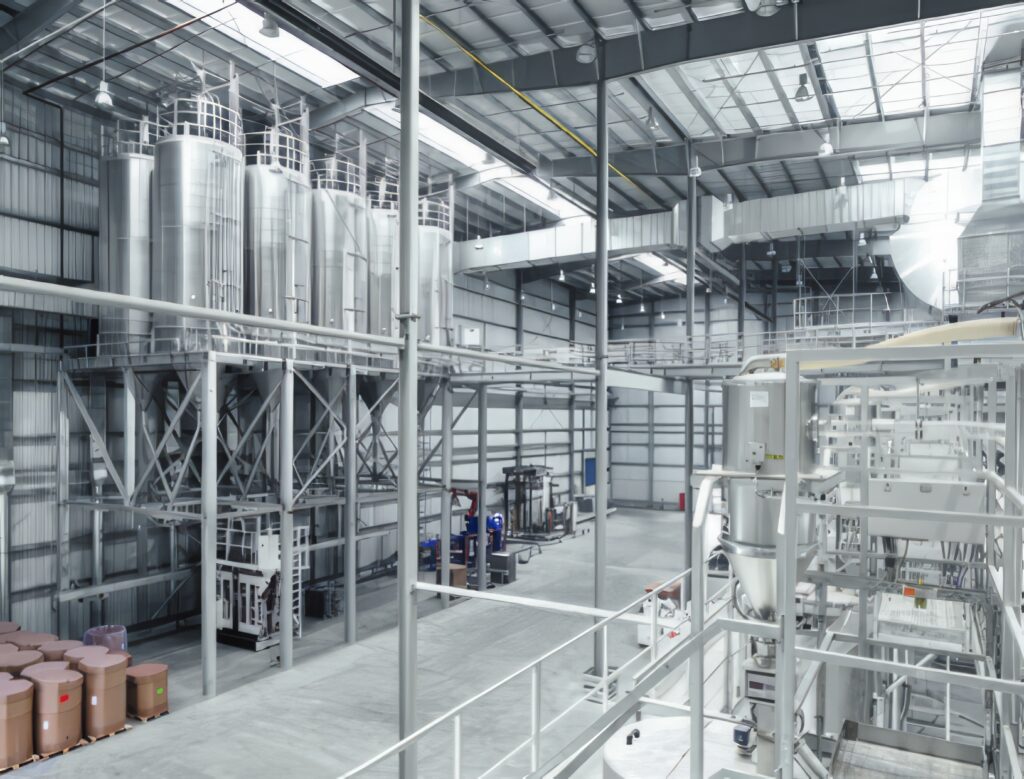
What AZO delivered (and why it matters)
The project’s acceptance criteria were explicit: integrate all raw-materials suppliers; keep the concept modular for future lines; accept multiple container types; enable easy-clean, fast changeover; maintain economical production across small/medium/large batches; provide operator-friendly process monitoring; and ensure long-term service/spares support. That’s the standard you can hold a local project to.
What this means for your plant (key technical takeaways)
-
Continuous LIW on each line → closed-loop mass control despite density drift; tighter quality, fewer reworks.
-
Outdoor silos with level probes + headspace drying → protected hygroscopic resins and an expandable silo farm.
-
Manual coupling + receivers above extruders → fast routing changes and minimal cross-contamination.
-
Segregated blower room with secondary filtration → higher availability and cleaner maintenance.
-
ManDos + container mixer → barcode-driven micro-additives, gram-accurate weighing, full batch genealogy, good premix homogeneity.
-
Day bins for short runs; indoor silos + mobile bagging for campaigns → predictable packaging flow and clear QA sampling points.
-
Wear/static control (glass tubes with earthing) → fewer blockages and longer component life.
-
Metal separation before finished-goods silos → cleaner product and lower downstream risk.
How Hard Recycle implements this in AU/NZ
As AZO’s local partner, Hard Recycle specifies, integrates, installs and supports these systems to AS/NZS requirements:
-
Specification & layouts — silo civil allowances, coupling-station placement, receiver sizing, LIW turndown/rate bands, materials selection for abrasive duties.
-
Controls & safety — integration of LIW/ManDos with site PLCs, interlocks, LOTO, wiring to local codes; blower-room segregation and filtration.
-
Commissioning & support — vacuum balancing, receiver refill tuning so LIW stays stable, documented additive workflows, finished-goods routing aligned to QA sampling, and operator/maintainer training.
Bottom line: This is a practical, standards-based way to run high-mix compounding—store smart, convey clean, dose by mass, document additives, and separate short runs from campaigns. If that describes your operation, we can deliver the same architecture locally and prove it on your floor.