AZO bioplastics material handling
AZO bioplastics material handling

AZO bioplastics handling – a practical reference suitable for ANZ markets
INTRO
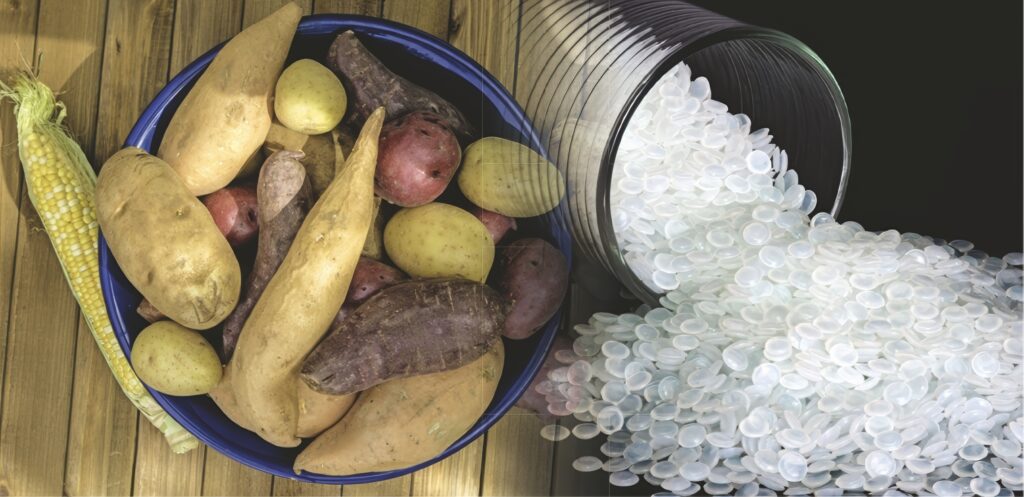
Client: A global bioplastics producer manufacturing low-moisture, plasticised starch pellets for blending with conventional and bio-based resins. Operations run multiple formulas across sites, with frequent changeovers and strict traceability requirements.
What AZO delivered: An end-to-end raw-materials and premix architecture that automates handling of plant-based starch materials, stabilises dosing for both solids and liquids, and keeps changeovers fast. The solution centres on AZO’s MIXOMAT (transport, dosing, weighing, mixing in one), a multi-port component intake with verified weighing/recording, operator-guided workflows for specials, and a layout engineered for future expansion and low operating cost.
Why bioplastics are a handling challenge
Starch-based inputs don’t behave like neat granules. They can be adhesive and bridging-prone, show batch-to-batch variability in bulk density and flow, absorb moisture readily, and throw dust-explosion questions into the design. If you also run liquid components (plasticisers, process aids), the recipe spans phases with very different metering needs. A plant that works on shift must therefore:
-
feed “difficult” solids without rat-holing or surging,
-
meter both solids and liquids by verified mass,
-
clean quickly to avoid cross-contamination, and
-
scale capacity without tearing up steel.
The reference system, from intake to finished premix
Greenfield layout (by total cost, not just capex)
An initial brownfield study was superseded by a greenfield design because it delivered a clean material flow, easier expandability, and lower steady-state operating cost. Pipe routes, platforms, utilities and controls were arranged so adding capacity later is a civil/installation exercise, not a redesign.
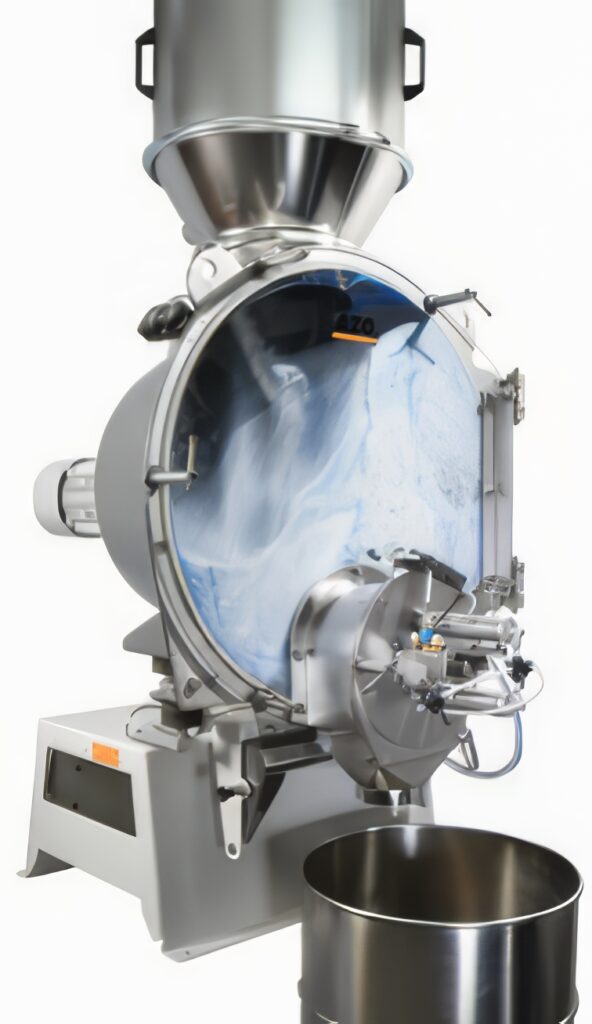
MIXOMAT at the core
The MIXOMAT integrates transporting, dosing, weighing and mixing in one compact module. Up to ~30 components can be called through a multi-port valve; each draw-off is weighed and recorded before it joins the batch. Modules are delivered pre-assembled to compress installation time, and configured for rapid product change with easy cleaning where families of recipes share equipment. The system also provides per-machine throughput registration so production gets verifiable numbers for OEE and costing.
Feeding “difficult” materials without drama
Flow problems are solved mechanically and procedurally, not by operator heroics. Hoppers, valves and transitions are shaped to discourage bridging; feeders are selected and tuned to the measured flow properties of the starch pellets/powders; and line-clearing/cleaning concepts (including pig-cleaning where appropriate) are built into the route so you can change product without leaving residues. Dust-hazard measures are treated as first-class design inputs—equipment selection, earthing, and documentation are part of the deliverable.
Solids and liquids, one control philosophy
Where formulations include liquids, the same mass-centric logic applies: bring liquids into the MIXOMAT with verified metering, record the actuals, and combine in a controlled, repeatable sequence. The operator sees one recipe, one workflow, one set of recorded numbers.
Operator-guided specials with traceability
Not every component runs often enough to justify full automation. AZO’s workflow supports operator-guided weighing (barcode prompts, tolerance windows) and automatic batch documentation. Specials are premixed in a container mixer to stabilise dispersion before they join the continuous process, preserving both quality and genealogy.
Why this design holds up in production
-
Consistency from real gravimetrics
Every component is weighed and recorded. Because the system regulates on mass, not assumed bulk density or screw RPM, recipes stay tight when material properties drift. -
Changeovers that protect OEE
Compact, pre-assembled modules with quick cleaning let you switch product families without long idle windows; the intake/mixing route is designed to clear safely and completely. -
Scalable by intent
Pipe bridges, ports and programs are prepared for additional components and higher throughput. Capacity increments don’t force a new plant layout. -
Lower operating cost, shift after shift
The greenfield layout was chosen because it reduces handling losses, shortens changeovers, and minimises rework—savings that recur long after start-up.
What this means for bioplastics producers (and compounders using bio-fillers)
If you process starch-based or other bio-origin inputs that are sticky, variable or dust-sensitive, a workable plant should deliver:
-
Automated intake for solids and liquids with controlled feeding and no bridging;
-
Verified, recorded dosing for every component to gram-level accuracy;
-
Fast, hygienic changeovers (line-clearing and easy cleaning designed-in);
-
Documented genealogy for audits and customer claims; and
-
A growth path that adds capacity without rebuilding.
The reference shows these outcomes are achievable with standardised modules, not bespoke one-offs.
What AZO brings
-
Process development using AZO’s test facilities to characterise your materials and validate handling/metering concepts before scale-up.
-
Global deployment experience to support parallel or staged roll-outs.
-
An integrated handling stack (MIXOMAT + multi-port intake + recorded weighing) that turns difficult feedstocks into repeatable production.
-
A delivery model geared to quality, consistency and operating cost—the KPIs that matter on your shift reports.
How Hard Recycle implements this locally
Hard Recycle represents AZO in Australia and New Zealand and delivers the same bioplastics-ready architecture under local standards:
-
Specification & design — translate your bio-raws (source, moisture, flowability, dust data) into hopper/valve geometry, feeding strategy, and cleaning concept; size the MIXOMAT and ports for your recipe count and throughput.
-
Layout & expansion logic — greenfield or brownfield, design for future capacity, clean material flow, and low operating cost from day one.
-
Controls & genealogy — integrate weighing/recording and component calling with site PLC/MES so every batch is verifiable; implement safe, documented changeovers.
-
Commissioning & support — start-up focused on repeatability, cleaning times, throughput attainment, and training; spares and service coordinated locally.
Note: AZO conducts any necessary material handling trials at its own facilities. Hard Recycle coordinates the interface and then engineers, installs, and supports the production system locally.
Bottom line:
Bioplastics aren’t “difficult” when transport, dosing, weighing and mixing are engineered as one system. AZO’s reference shows how to run sticky, variable, explosion-sensitive materials reliably and economically—and Hard Recycle can put that pattern on your floor, ready to scale.