ITR Valorisation Systems: RDF Fuel & Compost
ITR Valorisation Systems: RDF Fuel & Compost

ITR valorisation systems – RDF fuel, composting & compost refining under one platform
INTRO
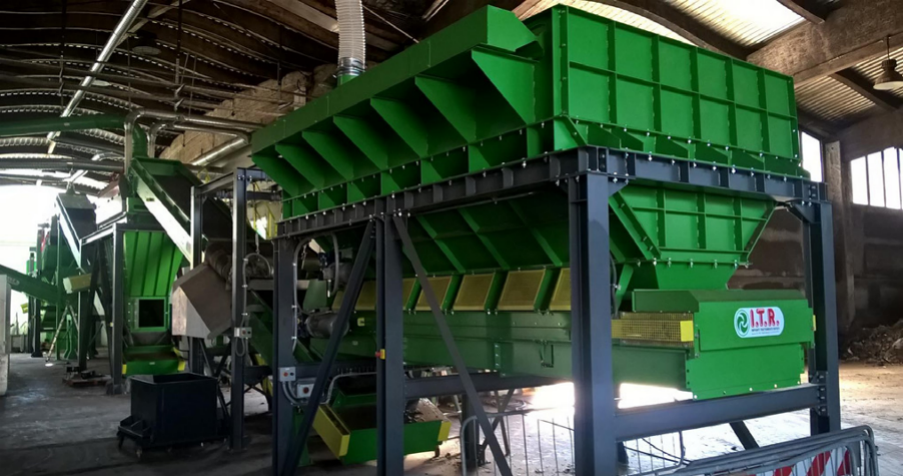
Hard Recycle exclusively represents ITR (OMAR Industries) in Australia and New Zealand. This article covers ITR’s valorisation lines, turning residuals into fuel-grade RDF and fertiliser-grade compost, with the same engineering DNA across all plants: high output quality, reduced footprint, custom-made layouts, and integrated, remote-supervised control.
1) Why residuals matter, and where RDF feed actually comes from
ITR builds RDF plants for the dry, non-recyclable fraction that exits selective-collection treatment and for the oversize from mechanical-biological treatment (MBT). In other words, the feed is the real residue of modern MRFs and MBT halls, not a theoretical mix.
The target is a mass-reduced fuel acceptable to authorised users such as cement kilns, thermal power plants and waste-to-energy facilities, with the whole line monitored and adjustable locally or remotely.
2) RDF fuel production, mechanical logic for a stable spec
Core sequence. ITR’s RDF lines apply mechanical treatment in a defined order: size reduction, sieving, metal separation, aeraulic separation of inerts. The goal is a drier, cleaner, density-stable fraction that behaves predictably at the off-taker.
Upstream preparation. Where bales or bulky items arrive, the opener TSO breaks packs and releases material for even loading. Optical readers can be introduced where a particular contaminant must be trimmed to meet a tight spec. Pelletizing is available where densified fuel logistics or certain kiln feed systems demand it.
Controls and plant posture. All lines run under ITR’s integrated supervision, accessible from any point and remotely. This matters when you must tune cut points, for example screen aperture and blower set-points on the aeraulic step, to seasonal waste changes. Reduced footprint is part of the design brief, not an afterthought.
Why it works. The sequence is physics-first. Size for liberation, sieve by cut, remove metals with magnetics, then use an aeraulic split to eject inert heavies and lights that destabilise calorific value and ash. With optical and pelletizing as options, not assumptions, you add complexity only where the off-taker pays for it.
Illustrative module chain (RDF).
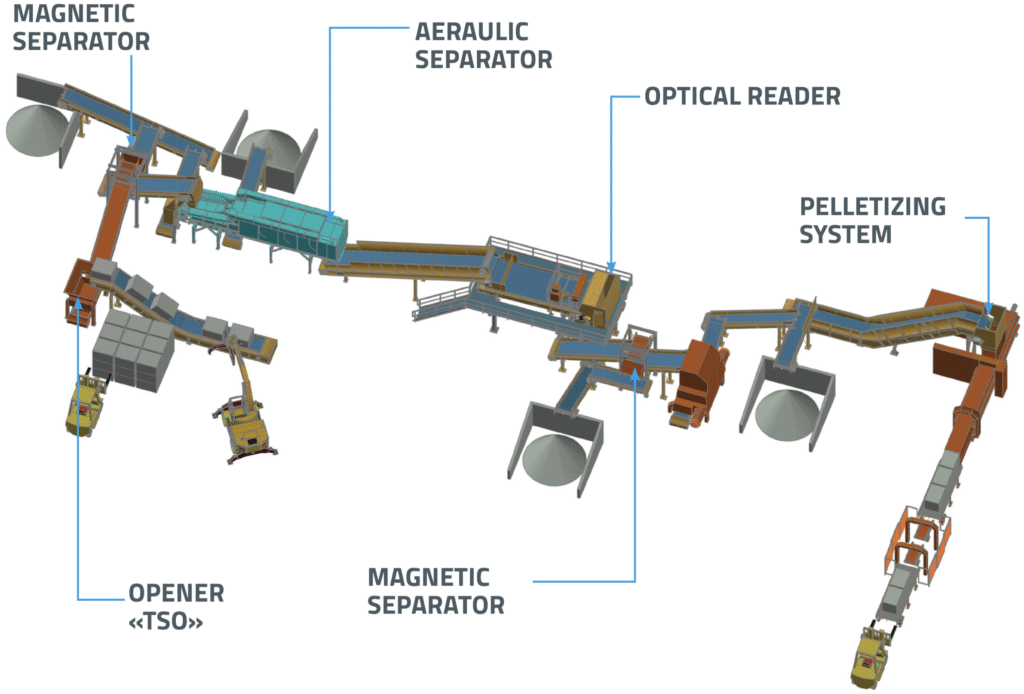
Infeed or bale opener TSO, primary size reduction, sieving to a specified cut (for example P80), magnetic separation for ferrous and eddy current if contracted, aeraulic inert split (AIR), quality control including optical if required, pelletizing if required, bunker and load-out, remote-supervised SCADA.
3) How MSW and C&I streams feed RDF, MBT linkage by design
For unsorted MSW, ITR configures a mechanical treatment that splits solids and organics while recovering ferrous and non-ferrous metals. A fully automated MBT can be integrated, followed by refining to RDF so the dry fraction exits with a more stable specification. Control uses the same remote-capable layer as other lines.
For C&I waste similar to urban, ITR plants apply mechanical cleaning, then mechanical and manual sorting for recyclable paper, cardboard, wood, packaging plastics, textiles and metals. The non-recyclable fraction goes to mechanical refining aimed at RDF, cutting landfill tonnage. Cabin air is changed and dust is filtered before discharge to protect workers and meet licence constraints. The line is again remotely supervised.
Takeaway. RDF is not a bolt-on, it is a defined outlet for the dry residual of front-end sorting and MBT, under the same controls and emissions framework.
4) Composting, engineered biology with controlled air and repeatable stages
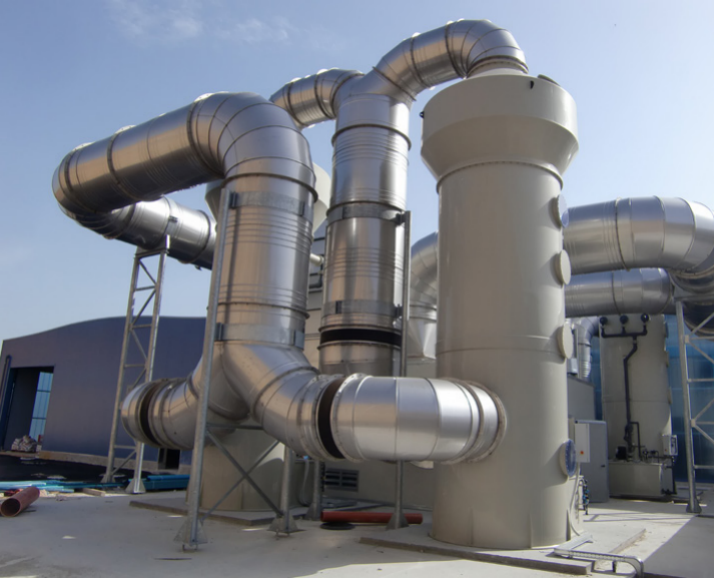
Process intent. ITR composting plants convert organics by mixing with vegetable material and a controlled bio-oxidation process. Exhausted air is extracted and routed through scrubbers and biofilters for odour reduction. Plants include pre-treatment, mixing and refining functions up front and down the line.
Design guidelines.
-
Homogenise and avoid compaction to preserve pore spaces and oxygen availability.
-
Hold treatment times precisely for proper stabilisation.
-
Start with a good initial mix and maintain effective monitoring and parameter management.
These are operating principles that drive layout, blower sizing and control recipes, not posters on a wall.
Typical staged flow. Reception and mixing, biocells with controlled aeration, first screening, maturation, second screening. Odours are handled via scrubber and biofilter. This staged approach enforces stabilisation before final screening, so QC does not chase immature compost.
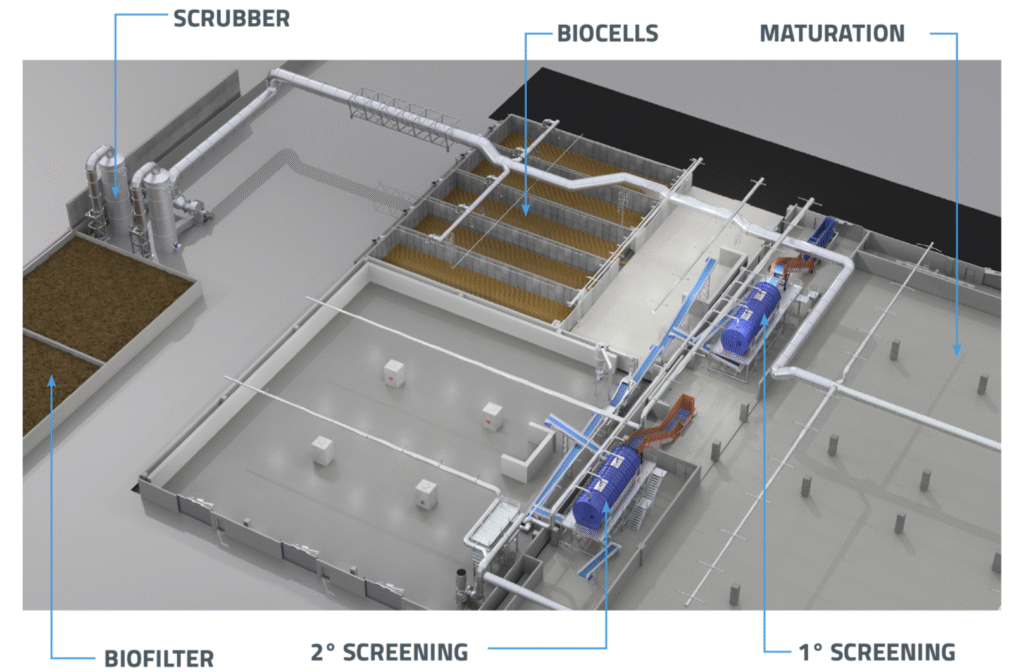
Platform commonalities. As with RDF, plants carry the same high output quality posture, reduced footprint, custom design, and remote-capable supervision. This is useful when you must adjust aeration cycles or detect a temperature lag during maturation.
5) Compost refining, removing pollutants and light plastics, closing the loop
Purpose. After bio-stabilisation of the organic fraction, ITR’s compost-refining plants produce good-quality compost suitable as fertiliser by removing contaminants and extracting problematic light fractions.
Two-step cleaning.
-
Rotating or ballistic screens remove pollutant components such as overs and contraries.
-
An aeraulic system increases separation efficiency and final cleaning, pulling out lights that the screen cannot capture by geometry alone.
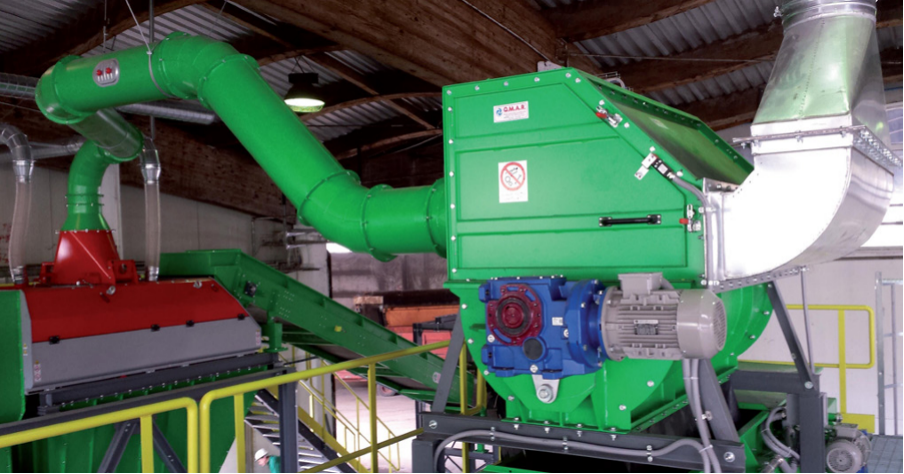
Air extraction for light plastics. The aeraulic and extraction arrangement removes the light fraction and light plastics from the structuring material. That material is then recovered and re-circulated into the process, improving both product quality and economics.
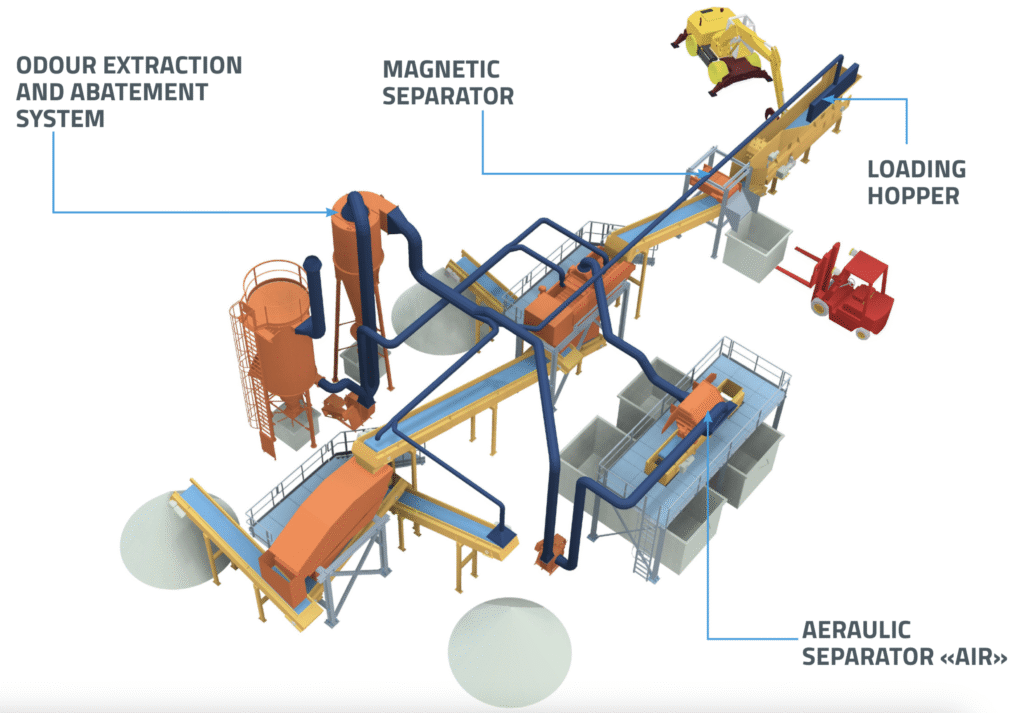
Packaged hardware. Modules include a loading hopper, magnetic separator, aeraulic separator AIR, and an integrated odour extraction and abatement system, all under the standard remote-supervised control layer, with the usual compact and custom posture.
6) Controls, emissions and footprint, one operating model
Across RDF, composting and compost refining, ITR repeats the operating model: integrated management with remote access, reduced footprint, and custom-made layouts aimed at high output quality. In organics, odour extraction with scrubbers and biofilters is standard. On C&I and MSW lines that feed RDF, dust extraction and cabin air changes are explicit parts of the system.
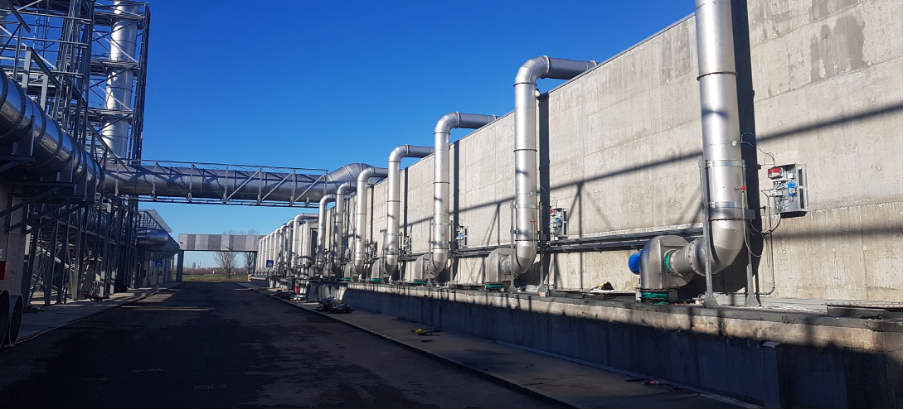
What this means on shift. Supervisors tune separator set-points and aeration cycles from one console, maintenance has fewer blind spots, and licence-critical parameters such as odour exhaust routing and dust filtration are part of the base design, not retrofits.
7) Application notes, where the details pay back
-
RDF spec stability starts at the screen. Sieve cut points define what the aeraulic AIR can profitably separate. Too coarse and you ship inerts, too fine and you choke throughput. The datasheet sequence, size then sieve then magnet then aeraulic, exists to lock those interactions down.
-
Use optical only where it moves the needle. Optical readers are a module, not a mandate, so deploy them for specific contaminants tied to off-taker penalties, not as a default.
-
Pelletizing is contractual, not automatic. Keep it as an option for logistics or combustion reasons. Otherwise, avoid unnecessary densification capex and opex.
-
Composting is an air and time problem. Homogenise, avoid compaction, run precise treatment times, and monitor parameters. Treat these as design criteria that set blower duty, floor slope and probe placement.
-
Refining closes the loop. Pulling light plastics from structuring material and recirculating that structure reduces fresh bulking agent demand and improves final compost cleanliness, a benefit that is measurable both for licensing and for market acceptance.
8) What Hard Recycle delivers, exclusive ITR partner for AU and NZ
-
Feed audit to flowsheet. We map your selective-collection rejects, MBT overs and C&I residuals to the RDF line modules, including opener TSO, screen cut points, aeraulic settings and magnet or optical placement. Controls are set up for remote tuning from day one.
-
Organics line design. We specify biocell aeration, screening stages, and scrubber plus biofilter duty. Monitoring points are aligned to stability guidance.
-
Compost refining. We size rotating or ballistic screens, set AIR extraction geometry for light fractions and light plastics, integrate magnetic separation, and connect odour abatement to the site stack. Structuring material recirculation is part of the process flow diagram.
-
Compliance and neighbours. On residual lines with hand-picking, we include cabin air changes and dust filtration to licence standards. Odour and dust are instrumented, alarmed and logged in the control layer.
-
Commissioning KPIs. We prove RDF spec stability, for example size distribution, metals residuals and inert removal rate, and organics cleanliness and odour control, for example screening efficiency, airflow and differential pressure set-points, biofilter performance, with remote playbooks for supervisors.
9) Example configurations, indicative
-
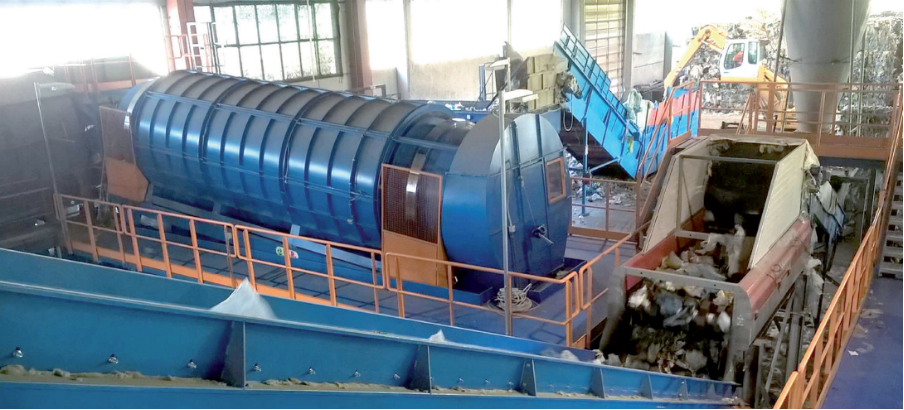
RDF from selective-collection rejects. Infeed, TSO opener, primary shred, sieving, magnet and eddy if contracted, aeraulic AIR, optical if specified, pelletizer if specified, bunker and load-out. Remote supervision is standard.
-
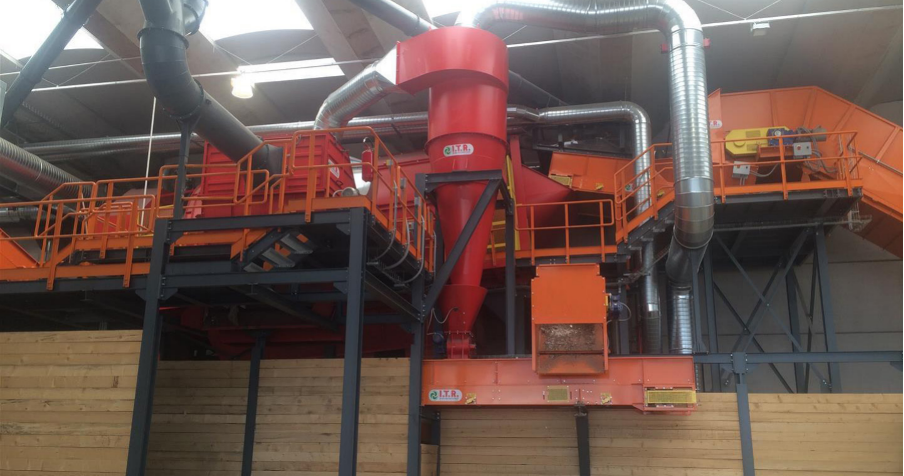
RDF from MBT overs. Transfer from MBT, size reduction, sieving, magnetics, aeraulic inert split, quality control, bunker. Remote tuning is used for seasonal drift.
-
Composting. Reception and mixing, biocells, first screen, maturation, second screen, storage. Exhaust air routed to scrubber and biofilter.
-
Compost refining. Rotating or ballistic screen, aeraulic AIR with extraction, magnetic separator, odour abatement. Structuring material recovered and recirculated.
Bottom line
Valorisation is a defined operating pathway, not a science project. ITR lines produce bankable outputs, RDF for energy users and clean compost for agriculture, using a clear mechanical sequence, aeraulic separation, and engineered air and odour control, all under one remote-supervised platform. As ITR’s exclusive partner in Australia and New Zealand, Hard Recycle designs, installs and supports these plants to your licence and commercial targets, with commissioning tied to measurable RDF and compost KPIs.