
MSW Sorting Systems | ITR Recycling
MSW Sorting Systems | ITR Recycling

ITR Sorting Systems — from tipping floor to clean commodities (paper/card, multi-material & MSW front-ends)
INTRO
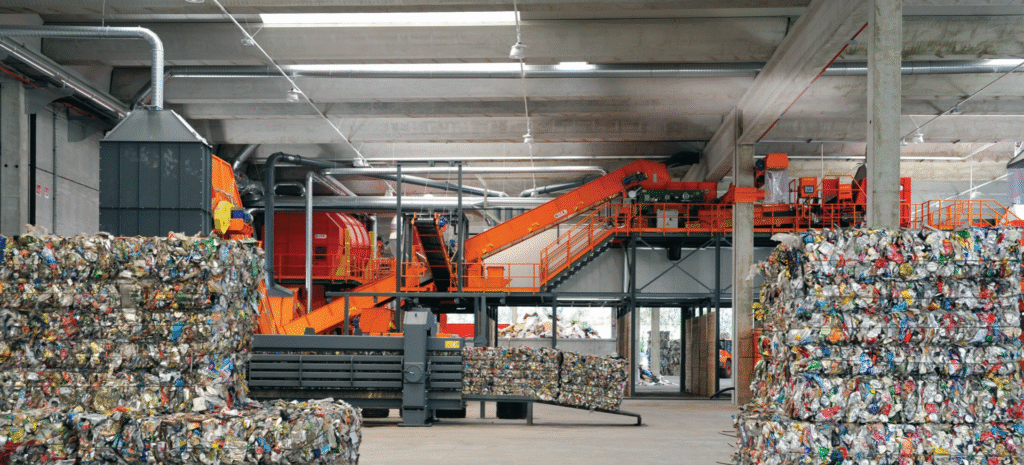
Hard Recycle exclusively represents ITR (OMAR Industries) in Australia and New Zealand. If your materials recovery facility (MRF), transfer station or council site needs higher purity, predictable operations and fewer operator “workarounds,” this article lays out how ITR’s front-end systems convert mixed inputs into clean outputs—using dynamic and rotary screening, aeraulic (air) separation, metals recovery, dust/toxic-fume control, and a remote-supervised controls layer. The emphasis is engineering logic over slogans: dosing what you feed, separating on physics, protecting people, and supervising the whole line from one pane of glass.
Why front-ends miss targets (and how to fix it)
Front-ends go off-spec when infeed is not dosed, cut points wander, light fractions re-contaminate, or cabins are bolted on without proper dust/fume control. ITR addresses these exactly where they start:
-
Dosing/feeding before the first separator so layers are even and the split is stable.
-
The right primary screen for the job (dynamic for paper/card splits; rotary for commingled streams).
-
Aeraulic “AIR” separation to push troublesome lights/inerts out of saleable fractions.
-
Worker/air controls integrated into the plant—not added later.
- Remote-capable supervision so you can monitor and tune flows without walking the facility.
Paper & cardboard — dose, split, verify
Typical pain point: lines starve then flood a separator; cardboard rides with paper and drags up rejects.
The ITR arrangement:
-
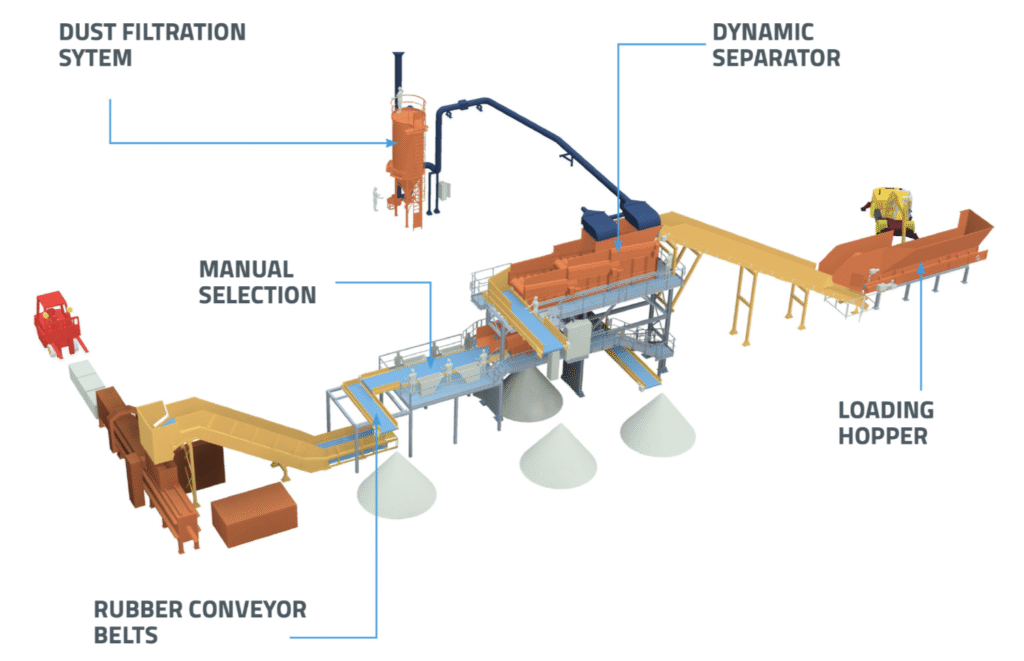
Feeding & dosage spreads material gradually into a dynamic separator that sorts cardboard from paper. The machine sees a steady layer, not peaks.
-
Manual control (operator QA) cleans residual contraries in both flows—practical and auditable.
- Dust filtration at transfer points and rubber conveyor belts for controlled material handling; the plant is run under a remote-supervised software layer so shifts don’t drift.
Why it works: dosing stabilises the dynamic split; operator QA becomes exception handling, not a salvage operation.
Multi-material (selective collection) — manual, optical or both
Typical pain point: a single “generic” line tries to do everything; light plastics and inerts re-enter good product; staffing is inflexible.
The ITR arrangement:
-
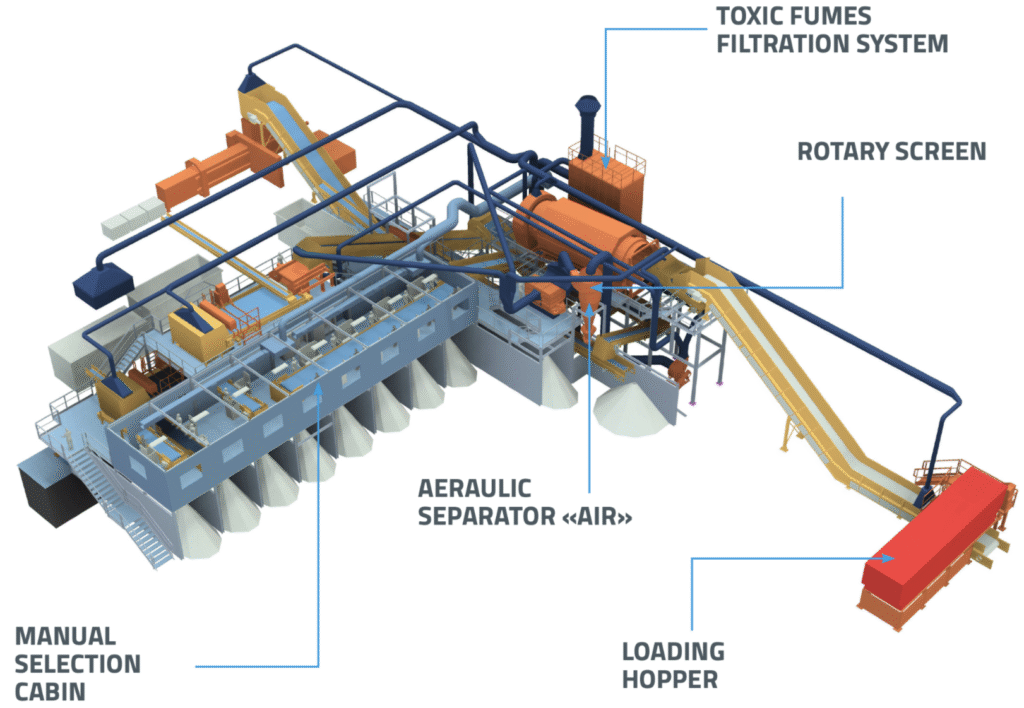
Pre-treatment mechanical systems to isolate glass, paper, plastics, ferrous and non-ferrous—the backbone before any polishing.
- Choice of traditional manual picking or automated lines with optical readers (NIR) for product-by-product sorting, sized to your tonnage and labour model.
- Rotary screening for initial cuts, AERAULIC “AIR” for density/shape separation (lights/inerts), with toxic-fumes filtration where the feed warrants it. Supervisory control is remote-capable.
Why it works: the heavy lifting is mechanical physics; optics are applied where they add recovery uplift to the plant.
C&I “special waste similar to urban” — recover what’s recyclable, route the rest to fuel
Typical pain point: mixed commercial loads look like municipal waste but carry higher contamination, making recovery patchy and RDF spec unstable.
The ITR arrangement:
-
Mechanical cleaning, then mechanical + manual sorting for recyclables (paper, cardboard, wood, packaging plastics, textiles, metals).
-
Non-recyclables flow to a mechanical refining step aimed at RDF production, minimising landfill tonnage.
- Dust-extraction systems change air in sorting cabins and filter dust before discharge—operator protection and compliance built into the plant. Remote monitoring/adjustment is standard.
Why it works: you don’t force contaminated streams through commodity lines; you stabilise what’s saleable and treat the rest as fuel feedstock by design.
MSW from unsorted collection — solid/organic split with MBT linkage
Typical pain point: wet organics poison recovery; metals slip through; residuals fluctuate.
The ITR arrangement:
-
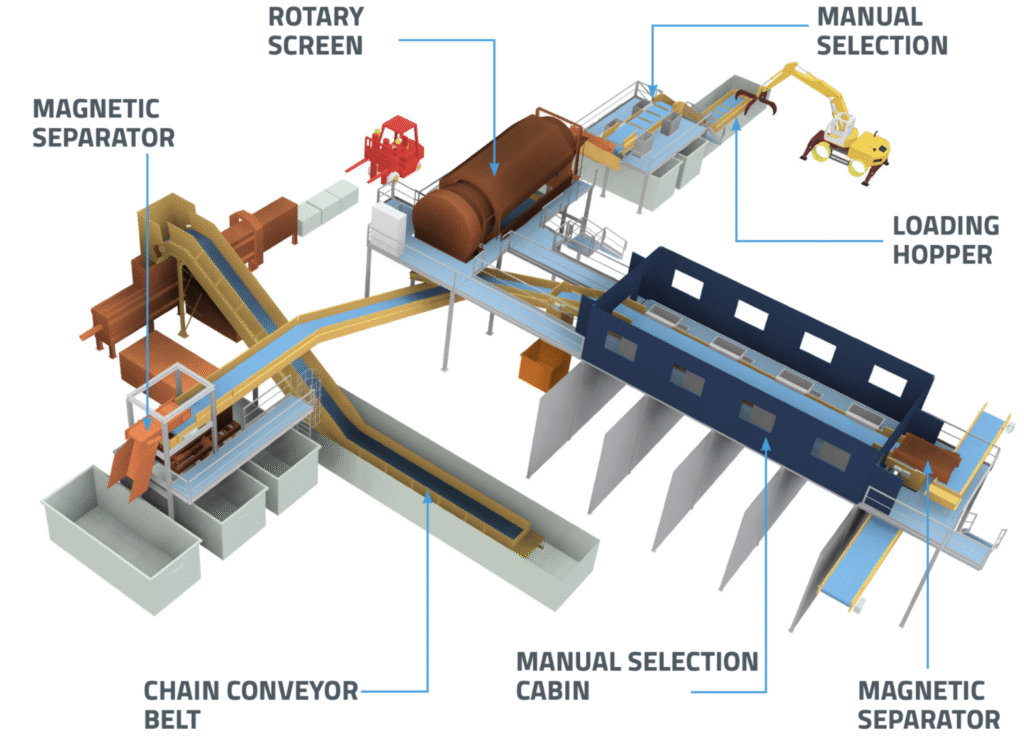
A mechanical treatment splits solid vs organic fractions and recovers ferrous/non-ferrous, setting up both sides for their downstream routes.
- If required, a fully-automated mechanical-biological treatment (MBT) section is integrated, followed by refining for RDF—the dry fraction gains a predictable specification.
- Core modules: loading belts, rotary screen, magnetic separation under a remote-supervised controls layer.
Why it works: organics stop contaminating recyclables; residuals are prepared for energy recovery with fewer surprises.
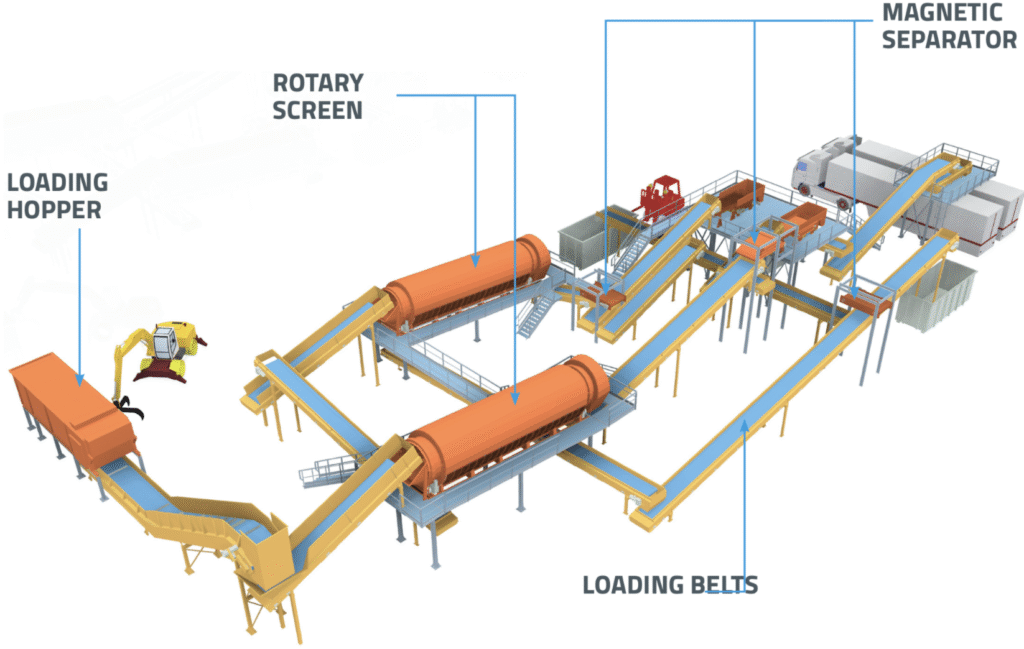
Separation physics that repeat
Across these front-ends, ITR’s catalogue repeats the same design DNA: high quality of the outcoming material, reduced footprint, custom-made solutions, and integrated management & supervision from any point of the system, including remote access. That consistency reduces training overhead and keeps shift-to-shift behaviour stable as staffing evolves.
- Dynamic separator where paper/card must be split by geometry and behaviour, fed by a dosing system.
- Rotary screens where size/shape stratification is the backbone of the flow.
- AERAULIC “AIR” where lights/inerts require an energy-efficient separation step that does not rely solely on optics or manual.
- Magnets (and eddy, where applicable) to lock in metals recovery early, not as a last-pass tidy-up.
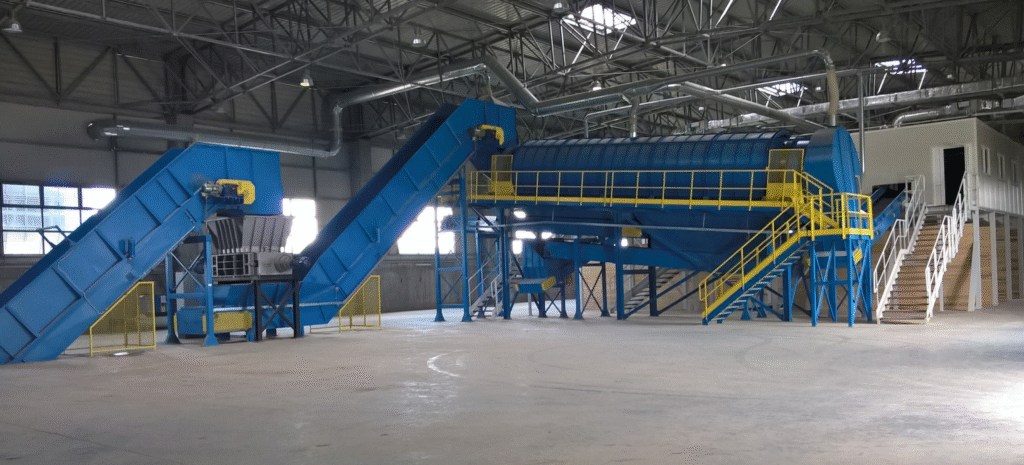
Equipment designed and engineered in, not bolted on
-
Dust extraction & filtration: cabins and working rooms get active air changes and dust filtration prior to atmospheric discharge. This is a design feature, not a retrofit.
-
Toxic-fumes filtration: specified where the feed warrants controls beyond dust.
-
Remote supervision: the same supervisory layer spans dosing, separators, screens and magnets—monitor and adjust from any point in the system.
The result: cleaner cabins, fewer nuisance complaints, and data to prove compliance.
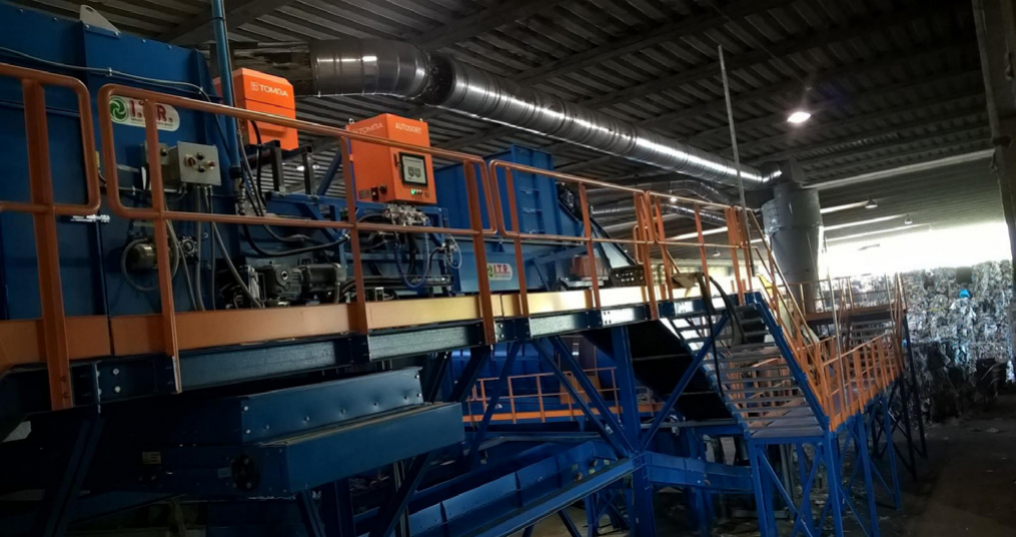
What this means for your plant (practical takeaways)
-
Stop chasing purity at the baler. Get the first split right with feeding/dosage and the right primary screen; then use AERAULIC “AIR” to keep lights/inerts out of saleable streams.
-
Design your labour model deliberately. Put manual QA where it creates value, and add optical readers where throughput or product count justifies automation.
-
Route residuals by intent. For C&I/MSW, send the non-recyclable fraction to mechanical refining for RDF instead of contaminating commodity lines.
- Avoid fines and maintain compliance as part of the line. Build in dust extraction (cabins/transfer), specify toxic-fume filtration where needed, and supervise the plant remotely.
What Hard Recycle delivers (exclusive ITR partner, AU/NZ)
-
Waste audit → flowsheet. We translate your selective-collection, C&I or unsorted MSW into screen cut points, AERAULIC settings, magnet positions, and the right balance of manual vs optical picking.
-
Paper/card lines. Dosing design to feed the dynamic separator, cabin layout for QA, and dust extraction at the right transfer points.
-
Multi-material lines. Rotary screens set the backbone; AERAULIC “AIR” handles lights/inerts; optical readers where they move the needle; toxic-fumes filtration when required.
-
C&I/MSW front-ends. Mechanical cleaning and metals recovery, optional MBT linkage and RDF refining; remote-supervised controls as standard.
- Commissioning KPIs. Purity targets at QA points, blower/airflow set-ups for aeraulic separators, cabin differential pressure and air-change rates, alarm philosophy testing, and a remote-access playbook for supervisors.
Example configurations (indicative, not prescriptive)
-
Paper/card MRF module: loading hopper → dosing → dynamic separator → manual QA (two-sided) → magnets as required → dust filtration at transfer points → bale bunkers; remote supervision.
-
Selective-collection module: loading hopper → rotary screen → manual cabin or optical readers → AERAULIC “AIR” → magnets/eddy → bunkers; toxic-fume filtration where needed; remote supervision.
- C&I “urban-like” module: loading hopper → chain conveyor → rotary screen → manual cabin → magnets → RDF refining path; dust extraction & filtration across cabins and transfers.
Bottom line:
Clean commodities start at the front-end. ITR’s dosing, dynamic/rotary screening, AERAULIC “AIR”, and integrated emissions/control package give you repeatable purity and predictable operations. As ITR’s exclusive AU/NZ partner, Hard Recycle designs, installs and supports these systems to your licence and commercial targets—so operators stop firefighting and outputs meet spec shift after shift.