
Silmisa size-reduction systems now in AU/NZ
Silmisa size-reduction systems now in AU/NZ

Silmisa size-reduction systems for AU/NZ — engineered lines for metals, cables, WEEE, wood & RDF
INTRO
Hard Recycle integrates Silmisa machinery into turnkey, standards-compliant lines across Australia and New Zealand for metals (light ferrous and aluminium), copper/aluminium cables, WEEE and small appliances, EOLT/tyres (pre-processing), carpets/textiles/automotive interiors, wood & sawmill residues, and C&I/MSW front-end for RDF/SRF. Silmisa’s installed base spans >25 countries (Europe, Latin America, MENA, and Southern Africa), and references in this area cover applications ranging from municipal and commercial pre-processing to cable recovery, WEEE fractionation, sawmill chip production and fuel-grade RDF preparation. The value for AU/NZ operators is simple: predictable particle size, high uptime, and low lifecycle cost, delivered by heavy European hardware that is designed to be maintained, not babysat.
Platforms that make a complete line (and why they matter)
- Primary opening with twin drives — TAURUS 220/280 and CENTAURO 280.
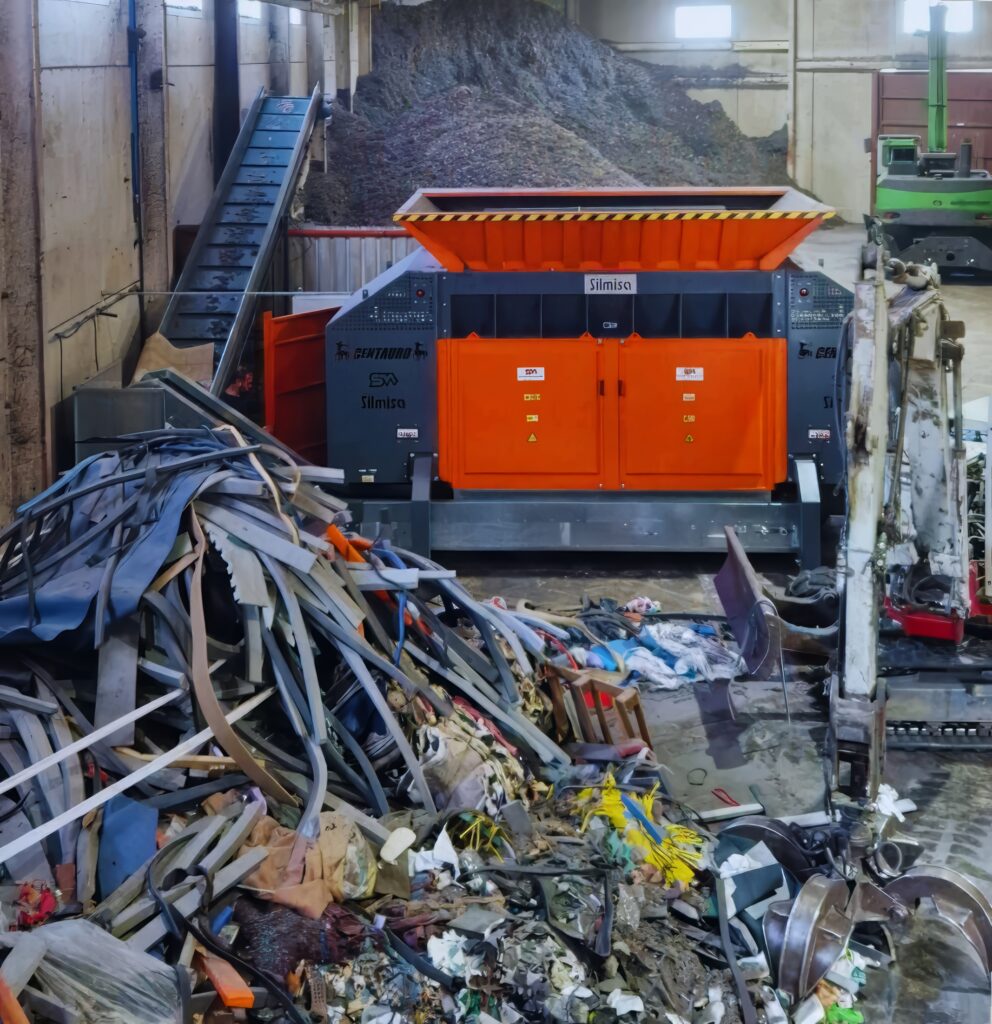
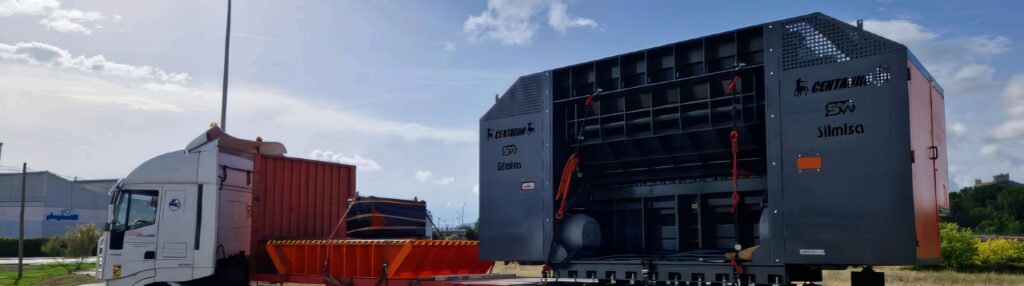
These are the high-torque, low-speed “openers” that turn bulky, heterogeneous feed into a controlled coarse fraction without drama. TAURUS is offered with 2×132 kW (220) or 2×150 kW (280) drives; both share an Ø 800 mm rotor with lengths to 2,800 mm, 60×60 or 80×80 mm cutter blocks, and up to 7 screen sections in the cutting chamber. Typical filling openings are 3,200×2,200 mm (220) and 3,800×2,200 mm (280) with cutting-zone volumes around 6.8–8.5 m³ and an outlet width near 1,100 mm—the geometry that lets the machine swallow awkward shapes (filters, thin-gauge pressings, carpet bales, small whitegoods) and keep a constant bite. CENTAURO 280 sits alongside with 2×132 kW, the same Ø 800 mm × 2,800 mm rotor class and the same knife sizes and screen concept. The point of this tier is uptime: automatic reverse clears transient overloads; protected bearings and wear-lined housings keep dust and fines away from critical components; and a large cutting zone stabilises feed on inconsistent infeed densities. - Finish sizing with single shaft — LINCE and PEGASO.
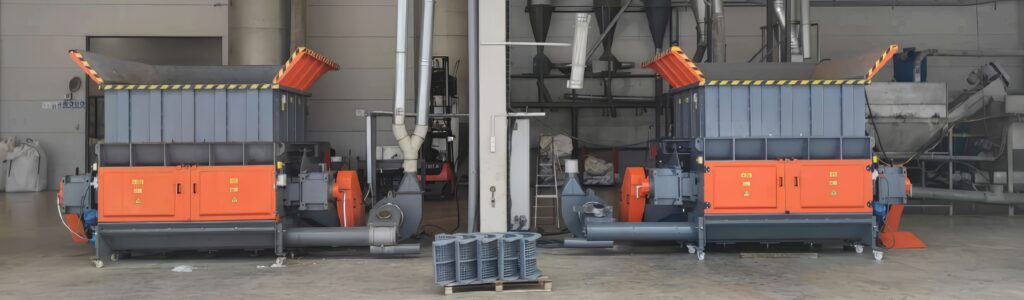
Once the coarse cut is made, Silmisa’s single-shaft machines close the particle-size envelope for separation physics downstream. LINCE spans compact to heavy duty with rotor diameters from Ø 300–520 mm, rotor lengths 620–2,400 mm, screen packs (typically 2–5 positions), and drive options from roughly 1×75–2×90 kW on the larger models. PEGASO pushes power and throat size further for high, steady flows: rotor Ø 520 mm in lengths 1,500 mm (PEGASO 150) and 2,450 mm (PEGASO 250), knife formats 60×60 or 80×80 mm, and multi-screen chambers to hold PSD tight. Where AU/NZ plants need 10–20 mm for cable granulation tables, 20–40 mm for WEEE sub-fractioning, or 30–50 mm for light metals and RDF, these machines deliver it without the heat and smear you get from high-speed mills—because the cut is low-rpm, high-torque, with pusher profiles that meter the bite instead of flooding the rotor. - Granulation and fines conditioning — FÉNIX.
When the duty calls for granules rather than chips—e.g., cable metal recovery or fines conditioning before densimetric separation—FÉNIX takes over. The FÉNIX 65/120 GP and 65/180 GP use 1×90 kW and 2×90 kW respectively, with rotors in the Ø 650 mm class, cutting lengths up to 1,800 mm, and high knife counts (e.g., 42+4 or 66+8 mobile/fixed). Feed slots like 1,230×400 or 1,870×400 mm dose the mill so you get a uniform, non-smeared granule that actually separates on the table. In cable lines we routinely stage TAURUS/CENTAURO → LINCE/PEGASO (10–20 mm) → FÉNIX + air/density tables to hit metal yields and avoid copper smear. - Static chipper for wood — TITÁN 700/1000.
For sawmills and biomass prep, TITÁN is a static chipper with 90 or 132 kW drives, rotor diameters Ø 700/1,000 mm, inlets around 630×290 / 930×470 mm, and a simple but durable knife stack (e.g., 2 fixed + 2/4 movable with 1 screen). The output chip is uniform enough for boilers or for panel furnish blending; the machine is built for continuous duty with heavy frames and guarded infeed rollers. - Peripherals and line modules.
Silmisa builds out the “everything else” too: conveyors, trommels and screens, magnetic and eddy-current separation, ventilators/cyclones, centrifuges, and big-bag stations. That matters, because you don’t end up with a Frankenstein line of miscellaneous vendors; the interfaces are owned, dimensional clashes disappear, and you get one PLC philosophy from infeed to bunker.
What “good” size reduction looks like (and how we design it)
In metals and cables, target PSD drives recovery. A 10–20 mm chip entering a granulator/table gives clean liberation and stable air flows; at 20–40 mm for WEEE, you create a brittle, sensor-friendly fraction from housings and boards while ferrous has already been liberated; at 30–50 mm and <80 mm for RDF/SRF you create a fuel that flows in bunkers and meets contractual spec. Throughput trades against screen aperture—so we stage: a TAURUS/CENTAURO coarse pass protects rate, and LINCE/PEGASO sets PSD precisely; FÉNIX closes the loop when granules are required. Knife geometry is tuned to the material: sharper edges for ductile aluminium and cables to avoid smear; tougher edges for light ferrous where impact and abrasion dominate. Hopper geometries and chute angles are set to angle-of-repose to prevent bridges on carpets/geotextiles; impact zones and high-wear walls are lined. On oil-bearing feeds (filters/cans) we add sealed drip pans and drain points into site waste-oil systems. Drives are sized not just for kW but for grid behaviour—VSD/soft-start, demand management and program profiles in the PLC (pusher speed, reverse logic, energy draw) so the machine works with your switchboard, not against it.
Dust, fire, and safety are engineered in from day one: interlocked access guards, LOTO points, safety-rated e-stops and fenced infeeds to AS/NZS practice, with IR/temperature or spark detection tie-ins where WEEE and textiles generate energetic fines. Air extraction points are provided above both primary and finish shredders; duct velocities and ΔP are designed, not guessed, so the baghouse does its job. All of that flows into real-world availability: the fast-change knives, multi-position screen baskets, and protected bearings cut downtime, and because the frames are genuinely heavy, the machines stay in tram longer.
How we deploy Silmisa in AU/NZ sectors
- Copper/aluminium cable lines. The high-yield flow is CENTAURO/TAURUS to ~150–200 mm, magnet clean-up, then LINCE/PEGASO at 10–20 mm feeding FÉNIX. With LINCE/PEGASO’s low-rpm cut and the granulator’s knife density, you avoid copper smear and end up with a uniform granule that separates cleanly on the tables. Chutes are designed to eliminate bird-nesting; maintenance flaps give straight-line access for knife indexing.
- Light ferrous and aluminium. For extrusion skeletons, thin profiles, sheet trim and radiators, we open with TAURUS (2×132/150 kW) to keep the bite steady on lightweight sections, then PEGASO sets 20–40 mm or 30–50 mm depending on your downstream (eddy-current, sensor-sort, or bale). With very ductile aluminium we tighten screens to 20–30 mm and specify sharper tool steels; for mixed light ferrous we widen the aperture to maintain t/h and protect the rotor.
- WEEE and small appliances. Hazard removal and de-battery first, then TAURUS/CENTAURO to ~80–150 mm, magnet, eddy-current, and LINCE/PEGASO at 20–40 mm for sub-fractioning ahead of sensors or QC pick. We add sealed pans under the shredders, and we pre-wire connection points for fire detection/suppression systems if the site requires inerting or knock-down.
- EOLT/tyres (pre-processing). Where rim separation is done upstream, we start with a coarse TAURUS pass to 100–150 mm chips, magnet out the steel, then PEGASO to 30–50 mm for TDF/SRF spec. The two-stage sequence makes a dimensionally stable chip that flows, cleans up on magnets and blends reliably.
- Carpets, geotextiles, interiors. Fibrous elastomers wad if you attack them with only a finisher. We stabilise with CENTAURO/TAURUS at ~80–150 mm and finish with LINCE/PEGASO at 25–40 mm. Hoppers get anti-bridging features and the pusher profile is tuned to dense felts; dust take-offs are placed over both machines.
- Wood & sawmills. A TITÁN 700/1000 cell with infeed rollers produces a uniform chip for boilers or panel furnish. Where chip spec is tight we add a trommel; the static format, big rotor diameters and 90/132 kW drives are built for continuous duty.
- C&I/MSW front-end for RDF/SRF. The winning approach remains staged: TAURUS/CENTAURO at 150–250 mm, magnet and screens, then LINCE/PEGASO to <80 mm fuel spec; add wind-sifting/density separation if glass/fines need to be controlled. Because both machines have multi-screen chambers, PSD is repeatable without operator heroics.
Why Silmisa (and why it matters)
Silmisa has been building recycling machinery for decades with a clear philosophy: heavy frames, low-speed torque where it counts, controllable PSD, and complete-line responsibility (mechanical, electrical and peripherals) rather than a box-only sale. The catalogue breadth—pre-shredders, single-shafts, mills, chippers, and peripherals—means we can keep a single control philosophy and mechanical interface from hopper to bunker. Their footprint in Spain, Portugal, France, Switzerland, the UK, Norway, Germany, Italy, Poland, Hungary, Turkey, Mexico, Chile, Brazil, South Africa, Morocco, Tunisia, Saudi Arabia and the UAE shows the hardware is not lab-ware; it runs in real climates, with real contamination, on real shifts. For AU/NZ customers, that translates into lower integration risk (we use proven modules and geometries), shorter commissioning, and a maintainable OPEX—especially with 8-way indexable knife blocks, screen packs sized to duty, and ready access for knife indexing and screen swaps.
Example configurations (examples only; individual configurations might vary)
-
Cable recovery (Cu/Al): CENTAURO 280 (2×132 kW, Ø 800×2,800 mm) → LINCE (screened 10–20 mm) → FÉNIX 65/120 GP (1×90 kW) + air/density tables. Delivers clean, uniform granules and high table yield without smear.
-
Light metals: TAURUS 280 (2×150 kW, opening 3,800×2,200 mm) → PEGASO 250 (Ø 520×2,450 mm; 60×60/80×80 mm knives; multi-screen chamber) for 30–50 mm. Eddy-current and sensor-sort downstream as required.
-
WEEE sub-fractioning: TAURUS 220 (2×132 kW) to ~100 mm, magnet/eddy out, then LINCE/PEGASO to 20–40 mm with dust capture points over both stages.
-
RDF finishing: TAURUS/CENTAURO front-end to 150–250 mm → PEGASO to <80 mm, QC pick, then bunker. Wind-sifting/density stages if glass/fines content is high.
-
Sawmill chips: TITÁN 1000 (132 kW, Ø 1,000 mm rotor, inlet 930×470 mm), with trommel where boiler spec dictates.
(Actual throughput depends on bulk density, contamination, and screen/aperture. We finalise motors, screens, conveyors, guarding and interlocks after reviewing your feed samples and targets.)
What we need to quote accurately
We need details about your materials (with photos/video), moisture/oil content and contamination notes; tonnage per hour and shift pattern; target particle sizes and downstream separation steps (magnets, eddy, optics, granulation, fuel spec); site power/noise/dust limits and floor-space/access constraints; and any safety/compliance specifics (guarding philosophy, access control, fire detection/suppression). We’ll return a TAURUS/CENTAURO + LINCE/PEGASO + FÉNIX/TITÁN configuration, a layout and interface schedule (conveyors, magnets, dust), and an installation/commissioning plan for AU/NZ conditions.
Bottom line:
Silmisa gives us a complete, modular toolkit for non-trivial, non-uniform feed—designed to produce repeatable PSD at industrial duty. Hard Recycle turns that toolkit into a working plant that meets AU/NZ standards and your commercial targets.