
Landfill Methane Control — Hard Recycle’s Solution
Landfill Methane Control — Hard Recycle’s Solution

Cutting Methane at the Source: Why Organics in Landfill Are Australia’s Silent Climate Risk—and How Hard Recycle Turns the Tide
INTRO
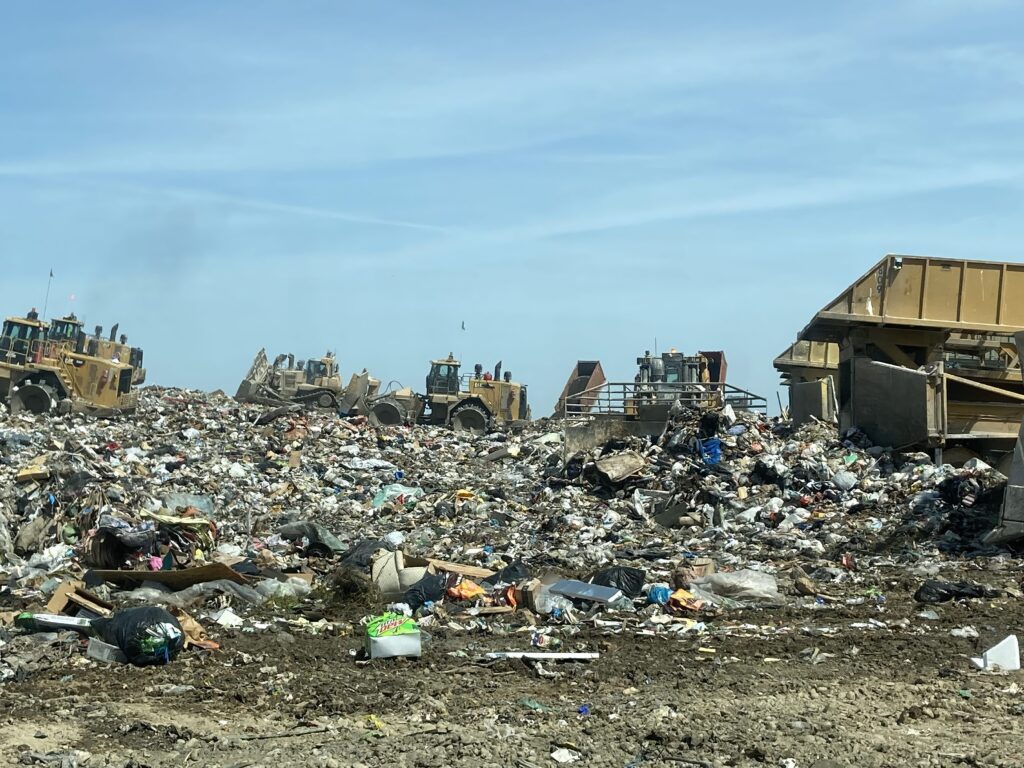
Australia’s waste sector rarely dominates the carbon debate, yet it is responsible for roughly ten million tonnes of carbon-dioxide-equivalent (CO₂-e) emissions each year. Close to three quarters of that total is methane released when food scraps, garden prunings, cardboard and other biodegradables decompose without oxygen in landfill cells. Methane’s warming potency—about eighty-five times greater than carbon dioxide over a twenty-year horizon—means a kilogram released today does more near-term climate damage than an articulated truck burning through a full tank of diesel.
A Numbers Check
National inventory data show that municipal solid-waste landfills account for slightly more than six million tonnes of the sector’s CO₂-e footprint; the balance comes from industrial waste repositories, wastewater treatment plants and unmanaged legacy dumps. Landfill-gas extraction systems capture part of the flow, but the average recovery rate across Australia sits below fifty percent. Even the best-run metropolitan sites seldom exceed seventy-five percent because methane continues escaping long after active capping—decades of slow seepage from older cells that lack gas wells.
The size of the residual problem becomes obvious when translated into organics: every tonne of food waste buried today will, across its lifetime, generate about three hundred cubic metres of raw landfill gas containing fifty percent methane. In greenhouse terms that single tonne ultimately equates to more than 1.9 t CO₂-e if uncontrolled. Multiply by the estimated 2.5 million tonnes of food and garden organics still landfilled each year and the theoretical fugitive burden exceeds four million tonnes CO₂-e annually.
Why Capture Alone Cannot Finish the Job
Landfill-gas power generation is established technology; there are more than seventy engine installations across the country. They perform a valuable service—converting fugitive gas into electricity or flaring it—but two physical realities remain. First, gas yield declines logarithmically, meaning old cells release lower concentrations that become ever harder to intercept. Second, installing additional wells in closed sites is expensive and mechanically risky. The marginal abatement cost therefore climbs steeply just as capture efficiency tails off.
That is why international climate modelling now prioritises avoidance—keeping organics out of landfill in the first place—over incremental improvements at the point of emission. In effect, the waste hierarchy needs to shift “upstream”: remove food waste from the disposal stream, treat it aerobically (composting) or anaerobically (biogas digestion), and return the carbon to soil or the energy grid without producing persistent methane plumes.
Policy Trajectory
Australian jurisdictions are moving in that direction. New South Wales has mandated separate kerbside collection of food-and-garden organics (FOGO) for all councils by 2030. Victoria and Western Australia have enacted comparable targets, while Queensland is consulting on a phased introduction beginning with metropolitan councils. The Federal Government is also revising the Safeguard Mechanism so that large landfill operators may soon be required to account for post-closure emissions.
Technical Bottlenecks That Still Hold Back Diversion
-
Contamination in FOGO bins: Even a few percent of plastic film or metal foil disqualifies loads from most composting certificates and can jam depackaging equipment.
-
High bulk density of supermarket waste: Pallets of packaged food need shredding and depackaging prior to digestion, otherwise plastic sleeves end up in the digestate and force costly re-screening.
-
Moisture and particle-size consistency: Anaerobic digesters operate best with slurry-like feed below a ten-millimetre particle size. Large chunks of hard melon rind or chicken bones cause pump wear and reduce hydrolysis rates.
-
Odour and bioaerosols: Pre-treatment halls must be under negative pressure and ventilated through biofilters or baghouses to stay within health regulations, especially when sited near residential areas.
-
Downstream solids handling: Digestate still contains fibrous material that needs separation, dewatering and—ideally—further aerobic curing to stabilise before land application.
How Hard Recycle Closes the Loop
Hard Recycle already integrates the full mechanical and pneumatic toolkit needed to overcome each of those bottlenecks and turn troublesome organics into low-carbon energy and high-grade soil improver.
-
Front-end reduction with ITR twin-shaft shredders: Whole supermarket pallets or council FOGO loads are reduced to a sub-150-millimetre fraction in one pass. Variable-speed, high-torque drives handle wet organics without stall, while reversible cutters expel stringy contaminants that would otherwise wrap shafts.
-
Depackaging and contaminant extraction via Tecnofer systems: The shredded stream feeds a horizontal depackager where adjustable paddles macerate packaging and expel soft plastics. Integrated water injection homogenises the pulp so polyethylene, polypropylene and PVC float off for subsequent baling, leaving a pumpable organic soup.
-
Precision drum screening from Zemmler: Dual concentric trommels grade the slurry, removing oversize and recovering any remaining plastics or bones. Screen decks can be swapped in minutes, allowing operators to switch between a five-millimetre cut for wet digestion and a twenty-millimetre cut when supplying aerobic composting lines.
-
Enclosed conveying by ARP: Once sized, the material travels via stainless-steel screw conveyors that prevent free liquid leaks. Shaft seals with automatic flushing resist abrasive pulp, keeping the reception hall floor dry and odour free.
-
Buffer storage and metering from AZO: A series of agitated stainless silos level out the peaks and troughs of incoming collections, feeding the digester at a constant solids-to-liquid ratio. Gravimetric twin-auger outlets maintain dosing accuracy within half a percent, the key to stable biogas yield.
-
Air-quality control engineered with OMAR: The reception and pre-treatment areas run under slight negative pressure, drawing vapours through OMAR reverse-pulse baghouses fitted with activated-carbon polishing stages. Outlet concentrations of volatile fatty acids and odorous sulphur compounds sit well below state environment-protection thresholds.
-
Metals and grit cleaning from Lanner: Digestate discharge passes a high-speed centrifuge that spins out ferrous clips, stones and glass shards missed during collection. Removing those abrasive fines protects screw presses and belt dryers further downstream.
-
Heavy-duty windrow turners from MLS Makina (for sites opting for aerobic curing): Hydraulically driven drum turners with adjustable paddle geometry introduce oxygen uniformly through four-metre triangular windrows, driving the thermophilic phase to above 55 °C and achieving pathogen kill within three days.
Performance Pay-Offs
A typical regional facility handling fifty thousand tonnes of mixed food and garden organics a year diverts the equivalent of more than ninety thousand tonnes of CO₂-e (calculated using a twenty-year methane global-warming potential). With digester biogas upgraded to seventy-percent methane, such a plant exports about forty thousand gigajoules of renewable gas annually—enough to supply nearly four thousand homes. Digestate, once dewatered and matured, returns over twenty-five thousand tonnes of stable organic carbon to agricultural soil, improving water retention and reducing the need for synthetic fertiliser.
A Mine-Site Case in Point
A modular, container-based ITR–Tecnofer–Zemmler processing line can be deployed at mining or construction camps that generate several hundred tonnes of food waste per month. By pre-treating organics on-site, such a system would cut long-haul disposal costs, reduce fugitive methane from landfill, and supply biogas for local power generation.
Looking Forward
Landfill-gas engines and flares remain essential transitional tools, but the national target of halving methane emissions this decade can only be met by keeping organic matter away from landfills altogether. Hard Recycle bridges the practical gap between policy ambition and on-the-ground reality. By supplying proven European technology suites—cutting, depackaging, screening, conveying, odour control and fine-solid treatment—and wrapping them in Australian engineering know-how, the company delivers turnkey plants that convert methane liabilities into valuable commodities.
The climate dividend is immediate, measurable and durable: fewer tonnes of potent methane entering the atmosphere today and more renewable energy and soil carbon supporting Australia’s low-carbon economy tomorrow. Hard Recycle stands ready to collaborate with councils, food manufacturers, waste contractors and mine operators alike to ensure the country’s next emissions-reduction gains come straight from the landfill face—before organics ever get the chance to rot.